
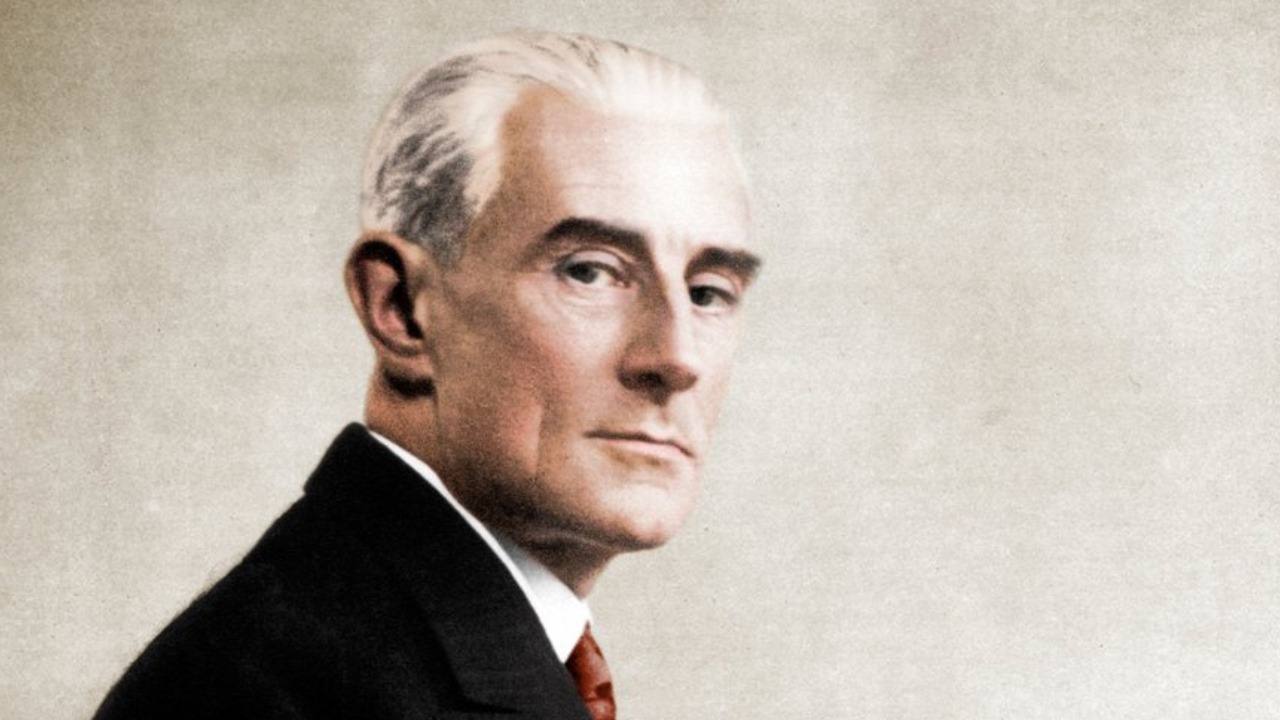
Composed in 1917, initially as a suite for solo piano, Le Tombeau de Couperin was Maurice Ravel’s musical response to the devastation of the First World War.
The 17th century word, tombeau, refers to “a piece written as a memorial.” Ravel dedicated each of the suite’s movements to the memory of a friend who was lost in the war. The title references the French Baroque composer, François Couperin (1668-1733), yet according to Ravel, “the homage is directed less in fact to Couperin himself than to French music of the eighteenth century.”
Le Tombeau de Couperin is music of dreamy escape. The Baroque dances which make up the four-movement orchestral suite (Prélude, Forlane, Menuet and Rigaudon) inhabit an idealized world which never existed. They unfold with the grace and elegance of fleeting ghosts. When listeners complained that they were not appropriately somber and elegiac, Ravel replied, “The dead are sad enough, in their eternal silence.”
If there is an underlying sense of melancholy in Le Tombeau de Couperin, it is the kind of sadness which comes from the realization of the ephemeral nature of beauty. The 1919 orchestral suite offers a magical kaleidoscope of soft, sensuous colors. The oboe, with its pastoral connotations, is prominent.
2025 marks the 150th anniversary of Ravel’s birth. This February 2, 2018 performance features Spanish conductor Jaime Martín and the Frankfurt Radio Symphony:
Ahh, Ravel’s “Le Tombeau de Couperin”… I knew the piece from recordings and learned to play parts of it on the piano. But I’ll never forget the moment in 1978, my first solo trip to Mexico when I was 21, sitting alone on an as yet-undeveloped beach in Cabo San Lucas, listening to Le Tombeau on my portable cassette tape player… one of those moments in life when you realize the profound lifelong treasure classical music has given you.
Le Tombeau I believe was partly inspired by Ravel’s interest in jazz… a lovely jazz rendition of it is the 2017 CD by the Vein Trio entitled “Vein Plays Ravel”, on Double Moon Records.