Prokofiev’s Symphony No. 1 in D Major, “Classical”: Musical Time Travel

If Haydn had traveled 100 years into the future, what kind of music might he have written? The 25-year-old Sergei Prokofiev provided a compelling answer with his Symphony No. 1 in D Major, Op. 25, widely known as the “Classical” Symphony. Filled with grace, elegance, exuberance, and humor, it is compact music, scored for the pared-down classical orchestra. Bold 20th century harmony meets traditional sonata form. In his autobiography, Prokofiev wrote, “It …

Read more

Prokofiev’s Russian Overture: A Joyous Homecoming
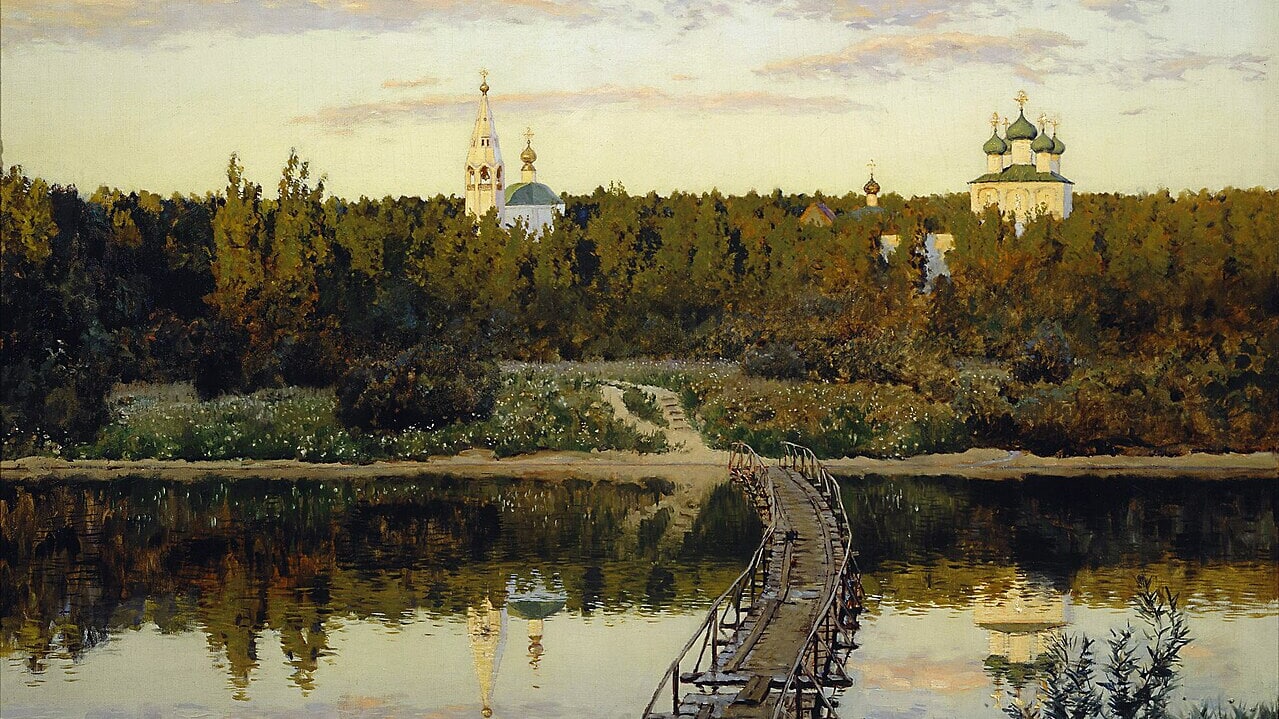
Even as Stalin’s purges intensified, a homesick Sergei Prokofiev returned permanently to the USSR in 1936. In 1918, he fled Russia, living in the United States and then in Paris. He was lured back with promises of artistic freedom and the ability to travel abroad, both of which ultimately were restricted by Soviet authorities. Composed in 1936, and premiered the same year by conductor Eugen Szenkar and the Moscow State Philharmonic, Russian …
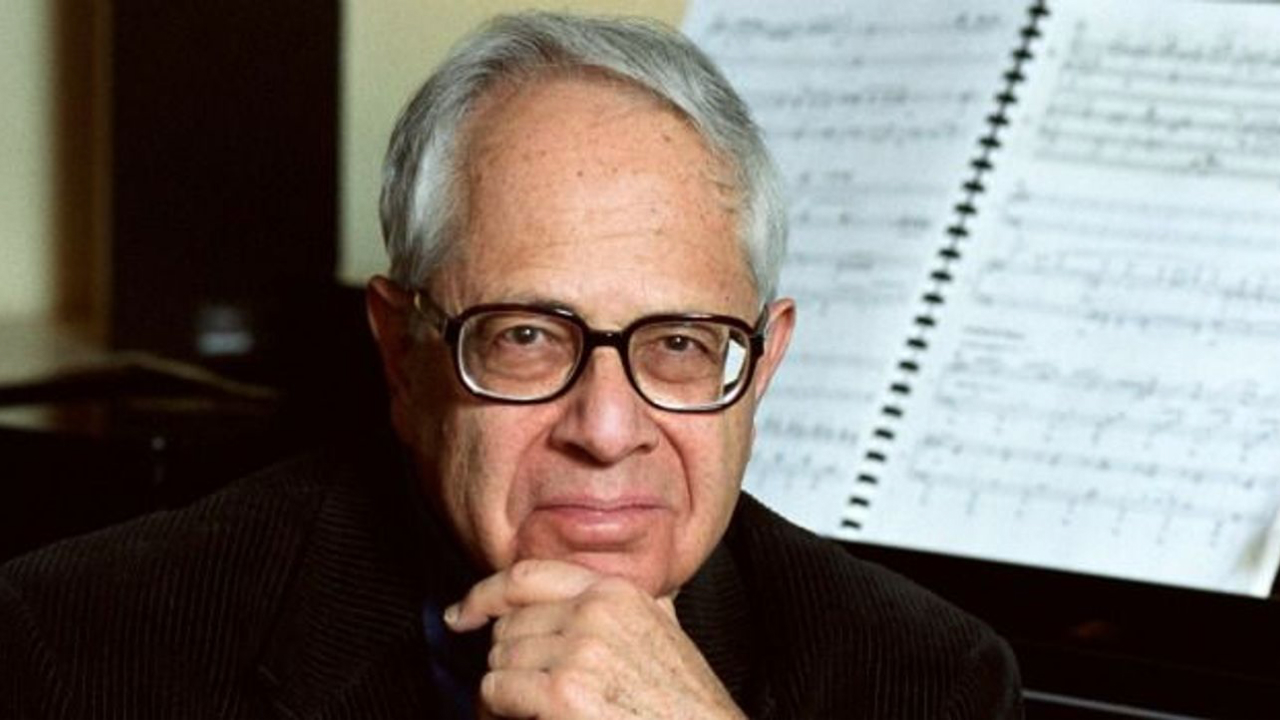
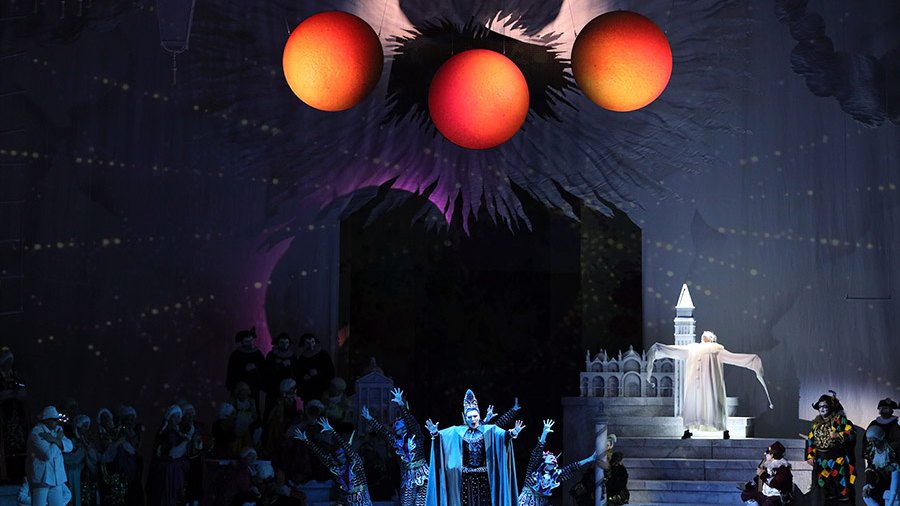
Read more

Remembering Gary Graffman

Gary Graffman, a renowned American pianist, teacher, and administrator, passed away last Saturday, December 27, at his Manhattan home. He was 97. A child prodigy, Graffman entered the Curtis Institute of Music at the age of 7, and studied with Isabelle Vengerova. In 1946, he made his professional debut, appearing with conductor Eugene Ormandy and the Philadelphia Orchestra. After winning the prestigious Leventritt Competition in 1949, he studied extensively with Vladimir Horowitz …

Read more

Prokofiev’s “The Love for Three Oranges” Suite: Music from a Surrealist Opera

Sergei Prokofiev’s satirical 1921 opera tells the fairytale story of a young prince who is cursed by a witch to fall in love with three oranges. The prince travels to far off lands in search of the citrus fruits, each of which, when peeled, contains a princess. The first two princesses die instantly when exposed to the elements. The third survives and marries the prince. The libretto, written by the composer, is …

Read more

Prokofiev’s String Quartet No. 1 in B Minor: Classical Foundations

The impetus for Sergei Prokofiev’s First String Quartet came from America. In 1930, Prokofiev received the commission from the Elizabeth Sprague Coolidge Foundation of the Library of Congress. The Brosa Quartet premiered the work in Washington, D.C. on April 25, 1931. At the time, Prokofiev lived in exile in Paris, having fled his native land shortly after the 1917 Russian Revolution. In 1936, he would return home, telling friends, “I must see …

Read more

Prokofiev’s Overture on Hebrew Themes: Klezmer Conversations

When the February Revolution of 1917 broke out in Petrograd, Sergei Prokofiev resettled in the United States, stating that his native Russia “had no use for music at the moment.” Soon after arriving in New York, the 28-year-old Prokofiev received a commission from Zimro, a touring Soviet ensemble made up of Russian Jewish immigrants. The new sextet was to be based on themes from a notebook of Jewish folksongs. In his autobiography, …

Read more

David Oistrakh in Recital

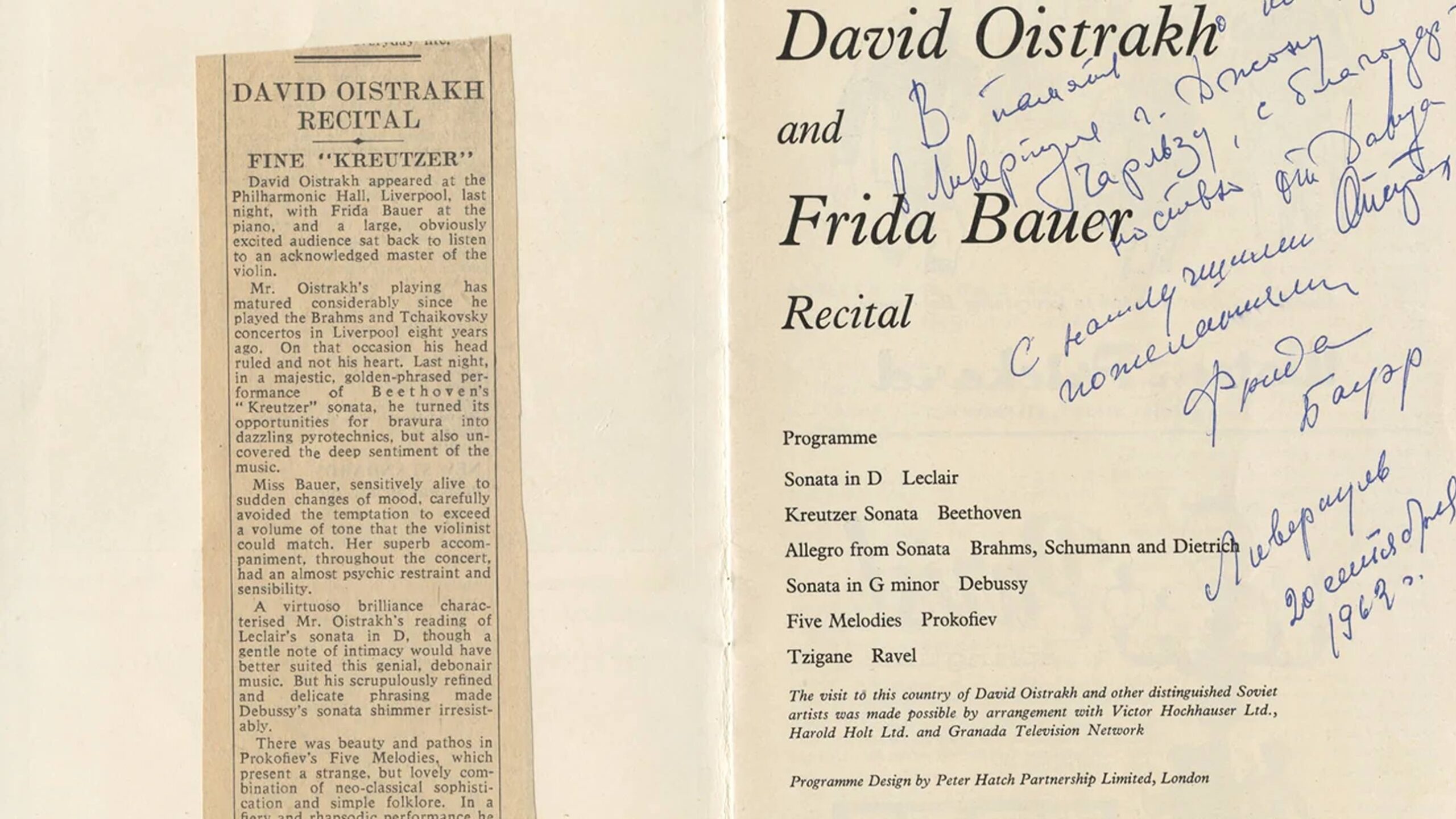
Warmth, sincerity, and nobility are words which have been used to describe the artistry of the Soviet Russian violinist, David Oistrakh (1908-1974). My teacher, Oleh Krysa, who was a student of Oistrakh, commented that “In his playing there had never been any pointedness of expression or surgery sentimentalism, there had never been a trace of affectation aimed at winning over the public.” (The Way They Play, Book 14) Instead, Krysa found that …

Read more