
Even as Stalin’s purges intensified, a homesick Sergei Prokofiev returned permanently to the USSR in 1936. In 1918, he fled Russia, living in the United States and then in Paris. He was lured back with promises of artistic freedom and the ability to travel abroad, both of which ultimately were restricted by Soviet authorities.
Composed in 1936, and premiered the same year by conductor Eugen Szenkar and the Moscow State Philharmonic, Russian Overture, Op. 72 is the music of joyous homecoming. Prokofiev’s biographer, Simon Morrison, writes that the Overture “includes motives derived from Russian folk dance, salon song and liturgical chant.”
It is larger-than-life music, brimming with exuberant activity and shimmering orchestral colors. In the final moments, the Overture’s themes come together in a majestic chorale, concluding with the ultimate musical fireworks.
Recordings
- Prokofiev: Russian Overture, Op. 72, Neeme Järvi, Philharmonia Orchestra Amazon
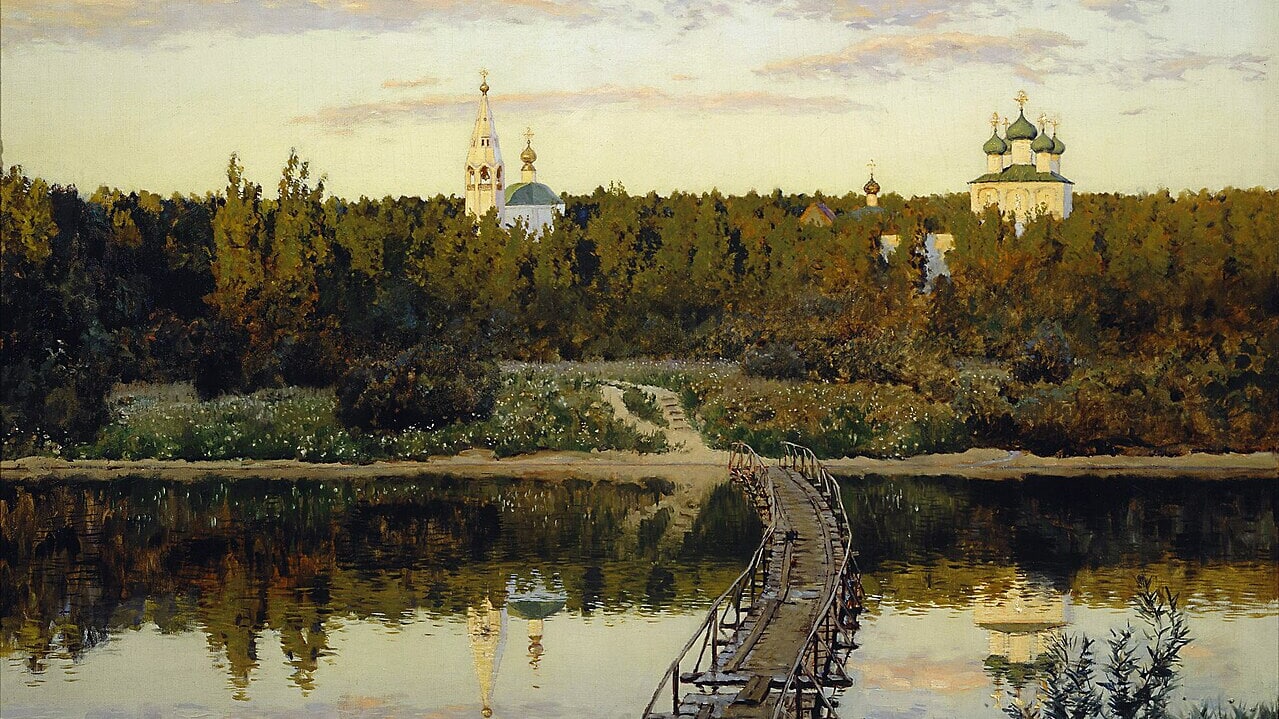
Featured Image: “A Quiet Monastery” (1890), Isaac Levitan