
The Blitz, a bombing campaign conducted by the Nazi German Luftwaffe against the United Kingdom, began in September of 1940 and lasted eight months. Its climax brought a firestorm which became known as the Second Great Fire of London.
It was during this dark period, when professional concerts were in limited supply, that Ralph Vaughan Williams suggested that composers write music for “combinations of all manner of instruments which might be played by people whiling away the waiting-hours of war.”
Vaughan Williams’ own contribution was Household Music, also known as Three Preludes on Welsh Hymn Tunes. The music could be played by string quartet and combinations of wind instruments. Now, it is most often performed by string orchestra with obbligato horn.
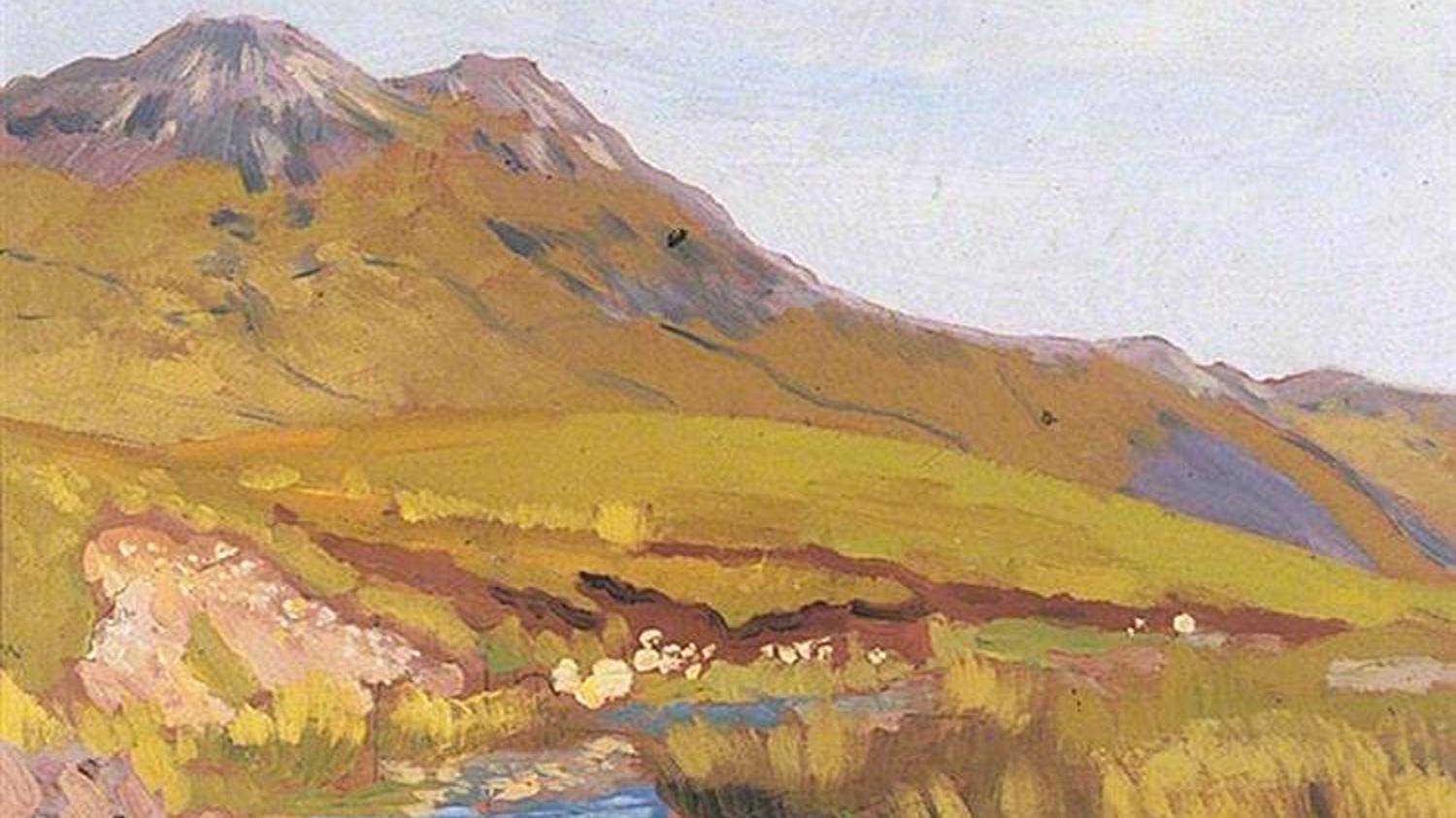
With a sense of timelessness, Household Music escapes to rugged, remote mountains and serene pastures while exploring the rich hymn tradition of Wales. The first movement (“Crug-y-bar”- Fantasia. Andante sostenuto) is based on a revival hymn from Carmarthenshire. The second movement (“St. Denio”-Scherzo. Allegro vivace) is mysterious and scurrying. Its melody is often sung to the words, “Immortal, Invisible, God Only Wise.” The final movement (Lento) is a set of eight variations on Joseph Parry’s 1876 hymn melody, “Aberystwyth.”
Recordings
- Vaughan Williams: Household Music, Three preludes on Welsh Hymn Tunes for string orchestra, Richard Hickox, Northern Sinfonia of England Chandos Records
Featured Image: “Welsh Landscape” (1914), Augustus John