
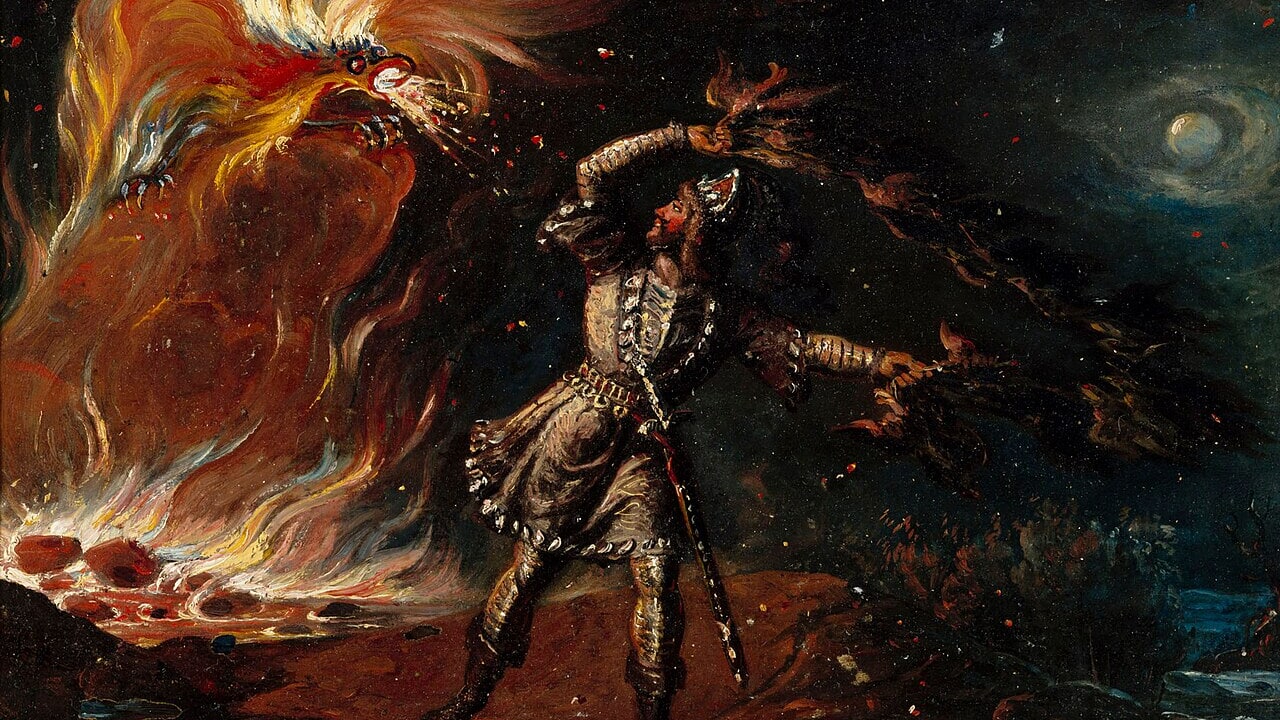
The Kalevala, the national epic poem of Finland, contains a myth with overtones of Prometheus. Ukko, the life-sustaining god of thunder, weather, and fertile fields, recreates fire after Louhi, the goddess of death and disease, steals it, along with the sun and moon.
The story is the subject of Jean Sibelius’ 1902 cantata, The Origin of Fire (“Tulen synty”), Op. 32, scored for baritone, male chorus, and orchestra. The work was written for the opening of the new home of the Finnish National Theater in Helsinki, the first Finnish-language theater company in the country.
From the Middle Ages until 1809, Finland was under Swedish rule, after which it became a Grand Duchy of Russia until 1917. Swedish remained the country’s principal language until the 20th century. The music of Sibelius played a vital role in a burgeoning and irrepressible Finnish nationalism.
Beginning in darkness, Sibelius’ cantata develops out of the gloom. With defiance, it grows organically as a life force. The piece has been described as “a slowly growing crescendo,” reaching a blazing climax with the chorus’ majestic, celebratory hymn.
This 2007 recording features Osmo Vänskä and the Lahti Symphony Orchestra with Finnish baritone Tommi Hakala and the Choir of Helsinki University. This is Sibelius’ 1910 revised version of the work. The album also includes the original 1902 version.
Recordings
- Sibelius: The Origin of Fire, Op. 32, Osmo Vänskä, Lahti Symphony Orchestra, Tommi Hakala, Ylioppilaskunnan Laulajat Male Voice Choir Amazon
Featured Image: “Lemminkäinen and the Fiery Eagle” (1867), Robert Wilhelm Ekman