
If Beethoven’s opera, Fidelio, is a story of imprisonment and heroic rescue, Hungarian composer György Kurtág (b. 1926) takes us deeper into the dungeon in his 1994 orchestral work, Stele, Op. 33.
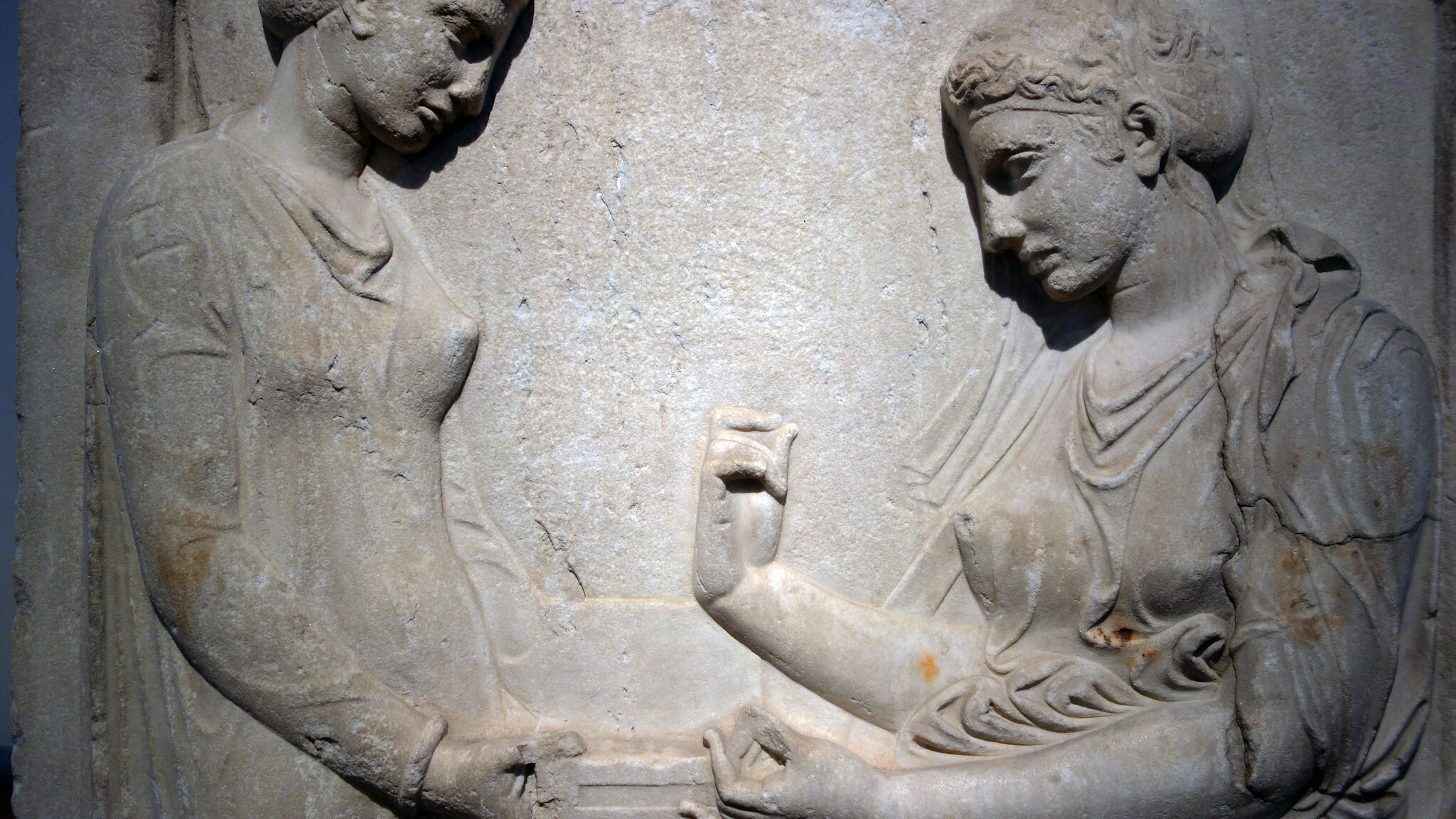
Stele is a Greek word for a decorated slab used as a tomb stone or commemorative monument. Set in three brief movements which unfold without pause, Kurtág’s Stele is a sombre musical epitaph for Hungarian composer, conductor, and teacher András Mihály (1917-1993). A theme from Kurtág’s earlier piano elegy for his friend, Mihály András in memoriam is incorporated into the final movement.
Stele begins with the deep, sombre, multiple-octave G that opens Beethoven’s three Leonore Overtures, written for Fidelio. Soon, the pitch begins to waver and disintegrate. Commentator Alex Ross notes
an unmistakable reference to the opening of Beethoven’s Leonore Overture No. 3 [with its Fidelio themes] – a representation of the topmost step of the staircase that goes down to Florestan’s dungeon… Kurtág, too, leads us to a subterranean space but [unlike Florestan] we never get out. The final movement, muted and maximally eerie, fixates on a spread-out chord that repeatedly quivers forth in quintuplet rhythms. At the very end the harmony shifts to the white-note keys of the C-major scale, all seven of them sounding in a luminous smear… Beethoven’s overture marches off into C-major jubilation. Stele, by contrast, limps through a parched, depopulated landscape…
Stele inhabits a haunting, mysterious world that we occasionally encounter in the music of Bartók. At the end of the opening Adagio, Kurtág uses a quartet of Wagner tubas with an inscription in the score, “Feierlich [solemnly] Homage à Bruckner.” Used frequently by Bruckner, the hybrid instrument has a sound which has been described as at once “unearthly” and “majestic.”
Beginning with the crack of a whip, the second movement is filled with raspy, swirling voices. Trombone glissandos punctuate a dense sonic cluster. The final moments fade into uneasy acceptance.
The final movement reveals an apocalyptic landscape. A shuddering ostinato suggests a ghostly funeral procession. Kurtág compared it to “the rhythm of a gaunt figure staggering on.” Commentator Herbert Glass notes a “reference to the ‘Lake of Tears’ episode in the young Bartók’s opera Bluebeard’s Castle.”
Kurtág described Stele as music evocative
of someone lying wounded on a battlefield. The fighting rages all around him, but he sees only a very clear, very blue sky… His feeling is that nothing is as important as this sky.
I. Larghissimo – Adagio:
II. Lamentoso – Disperato, con moto:
III. Molto sostenuto:
Recordings
- Kurtág: Stele, Op. 33, Claudio Abbado, Berliner Philharmoniker Amazon
Featured Image: Grave stele of Hegeso, c. 410 B.C.E., marble and paint, from the Dipylon Cemetery, Athens, 5 feet 2 inches high (National Archaeological Museum, Athens)
I was mesmerized reading the story of this piece. And when I listened – first, multiple times to the Leonore #2 from your last post, and then moving on to the Stele piece – how it opens with Beethoven’s G is just thrilling! I was captivated. A fascinating, mysterious, multilayered piece of music that demands repeated listenings. Leonore #2 has now become my favorite of the three overtures. The Stele is just incredible! Very exciting to learn about this piece. TU!