
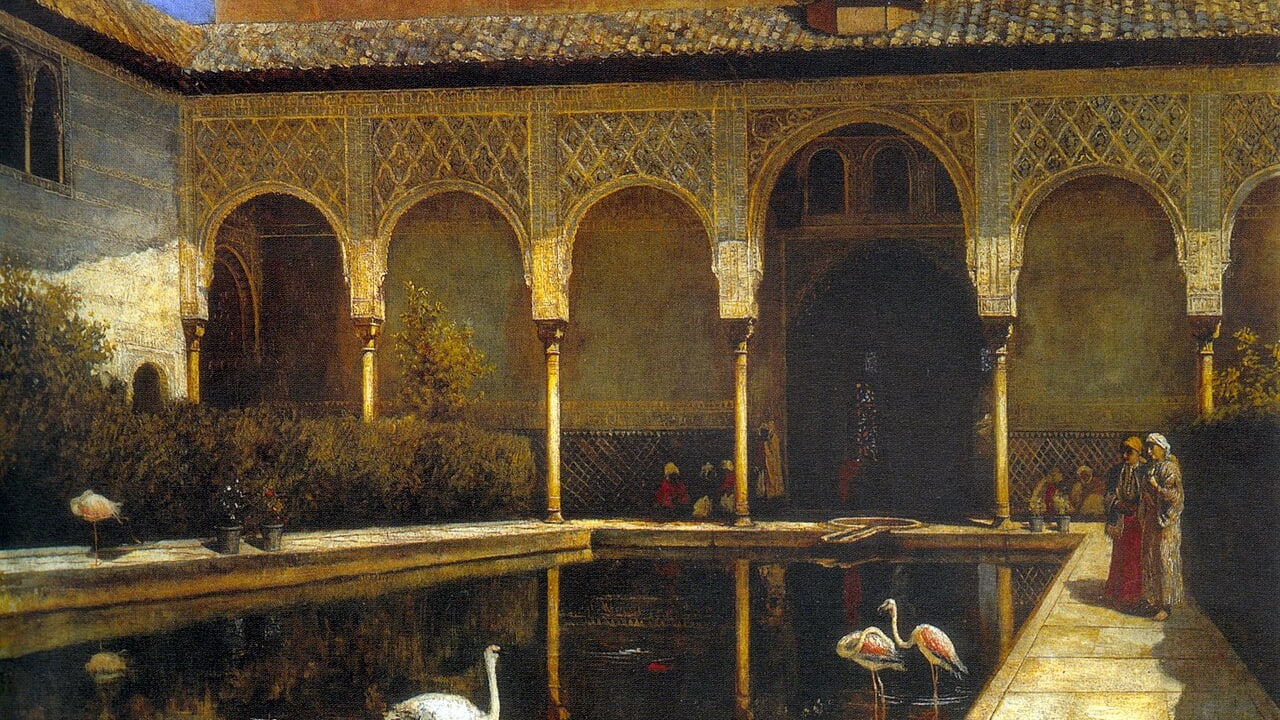
Dreamy and seductive, La puerta del Vino (“The Gate of Wine”) is the third piece in Claude Debussy’s Préludes, Book 2 for solo piano, published in 1913.
The work is said to have been inspired by a postcard Debussy received from Spanish composer Manuel De Falla, depicting a Moorish gate at the Alhambra Palace in Granada. For the performer, Debussy provides the interpretive marking, “With sudden contrasts of extreme violence and passionate tenderness.”
We are lulled into the steady, hypnotic rhythm of the habanera, a dance which originated in Cuba. Pianist Jannie Lo Burdeti notes allusions to “the soulful flamenco cante jondo, or deep song: a vocal genre, traditionally with lyrics about the unpredictability of life.” With echoes of a strumming flamenco guitar, a magical scene emerges from a distant Moorish past.
Recordings
- Debussy: Préludes, Book 2, CD 131: III. La puerta del vino Arturo Benedetti Michelangeli Amazon
Featured Image: “A Court in The Alhambra in the Time of the Moors,” Edwin Lord Weeks