
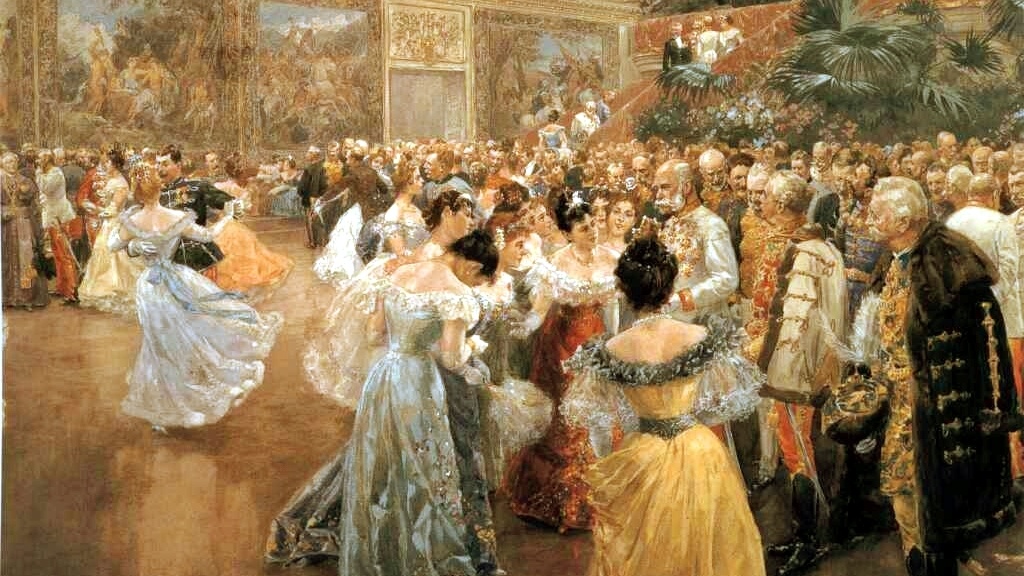
Maurice Ravel’s glittering orchestral tone poem, La valse, is filled with ghosts of an over-waltzed bygone Vienna.
Alex Ross describes the haunting work, completed in 1920, in terms of “Old Europe waltzing in the twilight…This is a society spinning out of control, reeling from the horrors of the recent past toward those of the near future.”
Originally titled “Wien,” La valse was written in response to a commission from Serge Diaghilev, impresario of Paris’ Ballets Russes. Diaghilev called it a “masterpiece,” but rejected it as, “not a ballet. It’s a portrait of ballet.” Ravel included a note in the score with the following dreamlike description:
Clouds whirl about. Occasionally, they part to allow a glimpse of waltzing couples. As they gradually lift, one can discern a gigantic hall, filled by a crowd of dancers in motion. The stage gradually brightens. The glow of the chandeliers breaks out fortissimo.”
A vast, gradual crescendo, La valse begins with hazy, muted tone colors and swirling elegance before spinning out of control amid glittering, grotesque excess.
In a previous post, we explored Ravel’s relationship with the waltz. This performance, recorded live on December 5, 2025, features Andris Nelsons and the Bavarian Radio Symphony Orchestra:
Featured Image: “Court Ballroom in Vienna” (1900), Wilhelm Gause