
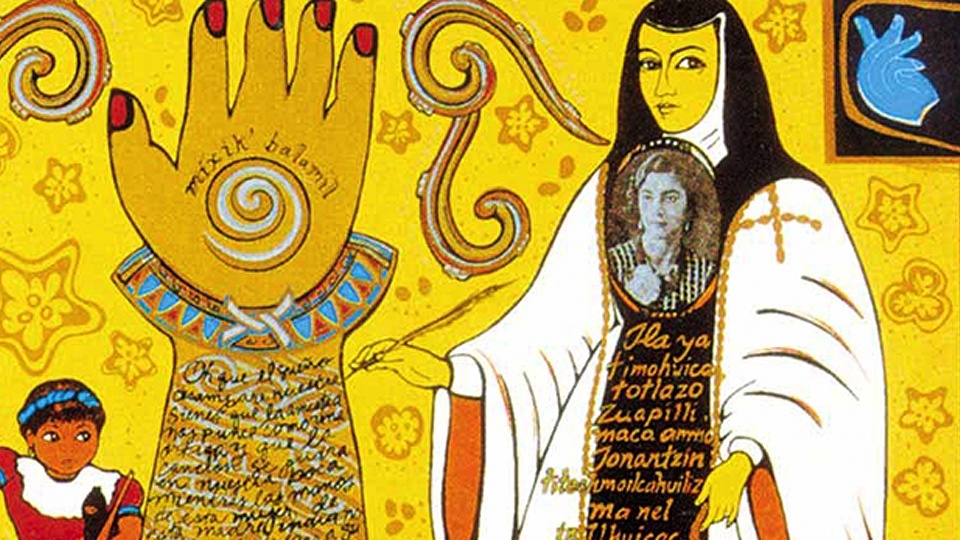
Composed in 1999, John Adams’ nativity oratorio, El Niño (“the child”), is a meditation on the nature of miracles. Based on the New Testament gospels, which Adams celebrates as “little more than long sequences of miracles,” the narrative structure is similar to that of Handel’s Messiah. Adams writes,
Narrative passages alternate with arias and choruses that meditate or reflect on the principal themes. Among those could be mentioned the mystery of the Conception and the miracle of the Nativity (and I should say, not only the birth of Christ, but also that of all children). Other themes: the suspicion and jealousy of Joseph, the pregnancy of Mary (and of all women), the paranoia of Herod (and of all tyrants), and the theme of exile.
Unlike Messiah, Adams draws upon a wide array of texts. These include ancient prophetic works of Haggai and Isaiah, Martin Luther’s Christmas Sermon, the “gnostic” gospels of Apocrypha, and the work of modern Mexican poet and novelist Rosario Castellanos.
I Sing of a Maiden
El Niño begins with an anonymous 15th century English text which celebrates the Annunciation of Mary. Musically, the opening bars deliver an ecstatic, anticipation-filled “announcement” similar to News Has a Kind of Mystery from Adams’ first opera, Nixon in China. Unfolding gradually over a persistent pulse, using the ingredients of Minimalism, it is music which draws us into an ever-eternal present. The final moments deliver a blinding sonic flash.
Magnificat
Mary’s Song of Praise is from Luke 1:46-55. The soaring soliloquy rises over dreamy, mysterious oscillating lines in the orchestra.
Shake the Heavens
The words of the Old Testament prophet Haggai appear in Handel’s Messiah (“Thus saith the Lord”). Here, there are echoes of Adams’ ferocious, trembling 1978 string septet, Shaker Loops.
Se Habla De Gabriel
Rosario Castellanos’ poem, Se Habla De Gabriel (“Speaking of Gabriel”) reflects on the pain of childbirth, and concludes with divine transcendence.
The Christmas Star
The oratorio’s first part concludes with exalted choral counterpoint. The words of Chilean poet Gabriela Mistral meet a 12th century hymn (O quam preciosa) by Hildegard von Bingen. The joyful strains evaporate with a suddenness that might remind you of the music of Charles Ives.
Recordings
- Adams: El Niño, Kent Nagano · Deutsches Symphonie-Orchester Berlin · The London Voices Nonesuch Records