
A notorious villain of the Hebrew Bible, the Baal-worshiping Athalia usurped the throne of Judah, attempted to kill all royal heirs, and ruled as Queen for six years (c. 841–835 BC) before being overthrown.
The dramatic story is the subject of Jean Racine’s 1691 play, as well as Handel’s 1733 oratorio. King Frederick William IV of Prussia commissioned Felix Mendelssohn to write incidental music for a Berlin performance of Racine’s Athalie. In addition to the Overture, Mendelssohn composed The War March of the Priests and six vocal pieces.
The Overture begins with a solemn chorale which might remind you of the opening of Wagner’s Tannhäuser. Coincidentally, Tannhäuser and Mendelssohn’s Athalie, Op. 74 premiered months apart in 1845. A flowing second theme, played by flutes and clarinets, is propelled forward by the glowing sounds of the harp and string pizzicati. A sudden trumpet fanfare opens the door to slithering chromatic lines and a tempestuous new theme.
The story ends with the return of a triumphant God. As Athalie attempts to have the young Joash executed, she is surrounded by armed Levites and submits to death. Near the end of the Overture, a series of harsh deceptive cadences foreshadow the “dead end” of the evil Queen’s story. The coda begins with a victorious proclamation augmented by the trombones. The majestic chorale soars upwards to its final cadence.
Recordings
- Mendelssohn: Athalie, Op. 74, MWV M16: Overture · Moshe Atzmón, New Philharmonia Orchestra Amazon
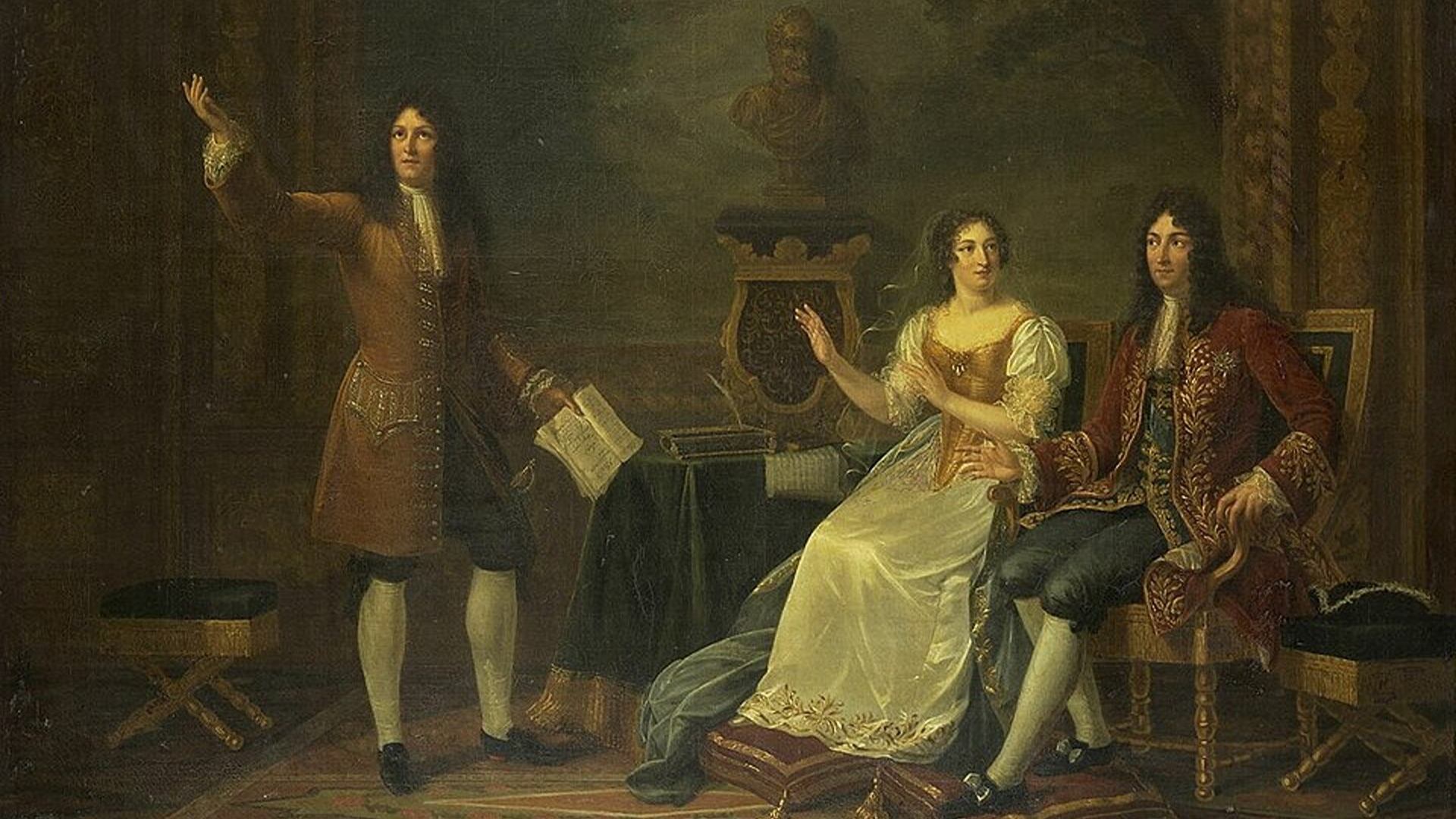
Featured Image: “Racine Reading Athalie Before Louis XIV and Madame de Maintenon” (1819), Julie Philipault.