
Creation develops out of primordial chaos in the Overture to the 1748 opera, Zaïs, by French Baroque composer Jean-Philippe Rameau (1683–1764). The shocking and innovative music predates Haydn’s similar depiction in the opening of his oratorio, The Creation, by half a century.
The Zaïs Overture begins with muted drumbeats, followed by detached fanfare fragments. At first, rhythm falters and the harmony is directionless. Disparate musical building blocks, representing the four elements of Earth, Air, Fire, and Water, begin a gradual and thrilling process of self-organization. Triumphantly, order emerges in the form of vigorous, celebratory scales and joyful counterpoint. Rameau’s music points, not only to Haydn, but to the dynamic drama of Beethoven and Berlioz.
A contemporary of Rameau wrote,
I consider that the overture paints so well the unravelling of Chaos that it is unpleasant; this clash of Elements separating and recombining cannot have made a very agreeable concert for the ear. Happily, man was not yet there to hear it: the Creator spared him such an overture, which would have burst his eardrums.
Set in four acts with a prologue, and filled with Masonic undercurrents, Zaïs is a Pastorale héroïque, a French Baroque form which combines opera and ballet. Its title character is an invisible mythological creature who disguises himself as a shepherd in an attempt to win the love of the shepherdess, Zélide. Zaïs demonstrates that he is willing to give up his magic powers in order to be united with Zélide. Ultimately, the couple is able to marry when she is granted immortality.
Berlioz considered Rameau to be “the first French musician who merits the name ‘master.'” Perhaps they were kindred spirits. Rameau published an influential 1722 Treatise on Harmony, and used an enormous orchestra in innovative ways.
Recordings
- Rameau: Zaïs Overture, Christophe Rousset, Les Talens Lyriques Amazon
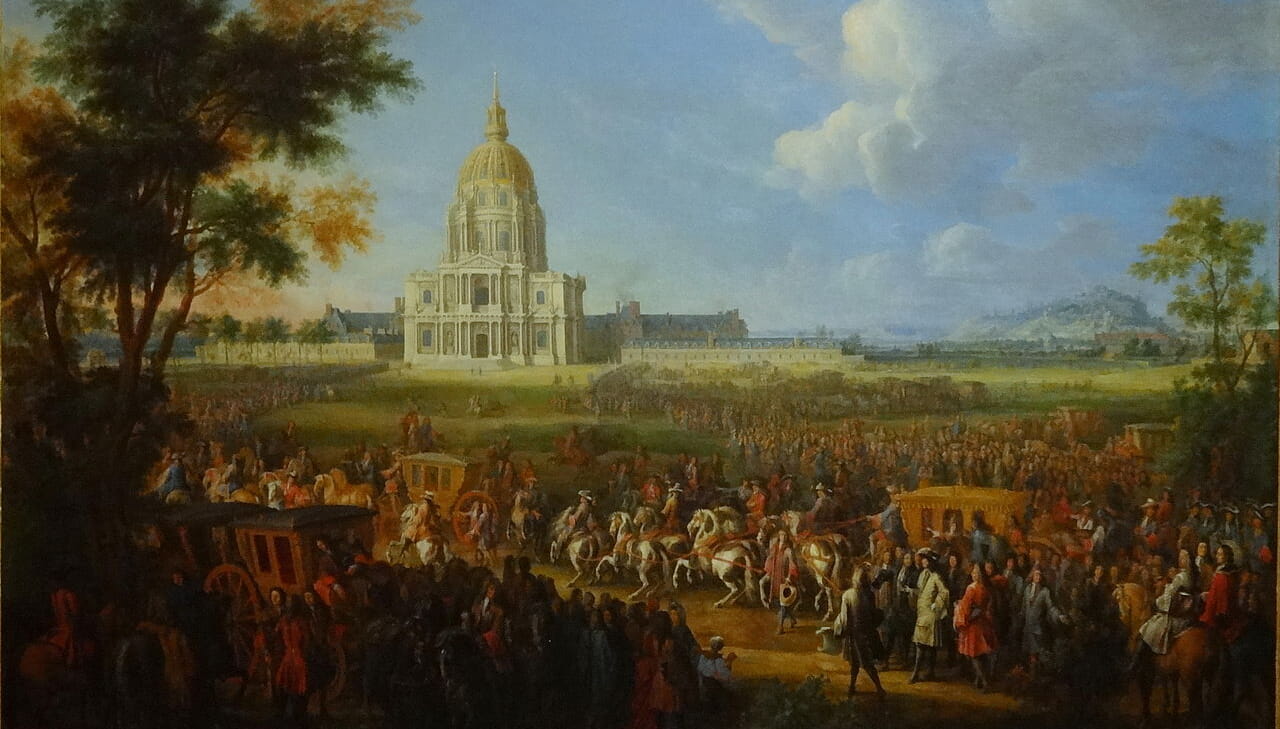
Featured Image: “Louis XIV Visiting the Hôtel Royal des Invalides” (1706), Pierre-Denis Martin