
Completed in 1944, Excursions, Op. 20 was Samuel Barber’s first published work for solo piano.
Using traditional compositional forms such as the rondo and theme and variations, its four brief movements venture deep into American musical vernacular. Barber referred to the collection as “nothing but bagatelles.” He wrote,
These are ‘Excursions’ in small classical forms into regional American idioms. Their rhythmic characteristics, as well as their source in folk material and their scoring, reminiscent of local instruments are easily recognized.
The first movement (Un poco allegro) is a five-part rondo built on a boogie-woogie. Built on blues chord progressions, a pounding bass ostinato, and forward momentum, this percussive African-American piano style gained popularity in the 1920s. For all of its urban hustle and bustle, Barber’s boogie-woogie contains moments of dreamy contemplation. Pianist James Sifferman imagines the “main theme played on saxophone, while the right-hand figure sounds like [a] harmonica, imitating the alternately in and out breath motions.”
In the second movement (In slow blues tempo), the blues becomes lonely and tinged with melancholy. This is the lazy, humidity wrapped music of the Deep South.
The third movement (Allegretto) is a set of variations on the cowboy ballad Streets of Laredo. Filled with magical cross-rhythms, it unfolds as a serene and hazy jazz improvisation.
The final movement (Allegro Molto) is a rollicking barn dance. It evokes the joyous strains of the fiddle and harmonica.
Rooted in the American landscape and the spirited folk music of its people, Excursions is unlike any other work by Barber.
This recording features American pianist John Browning:
Recordings
- Barber: Excursions, Op. 20 John Browning Amazon
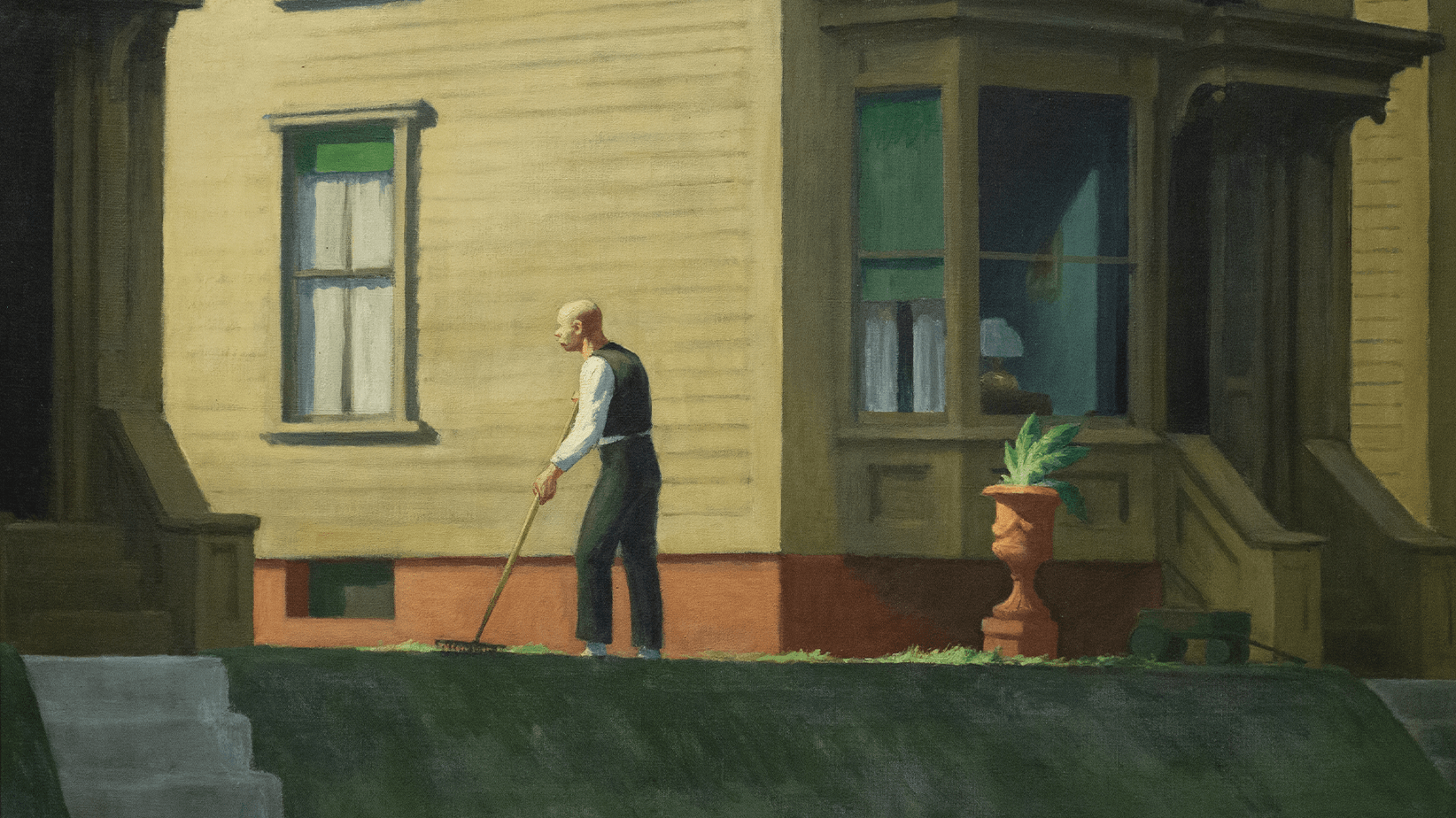
Featured Image: “Pennsylvania Coal Town” (1947), Edward Hopper