
In January of 1786, Mozart was hard at work on The Marriage of Figaro when he received an attractive imperial commission.
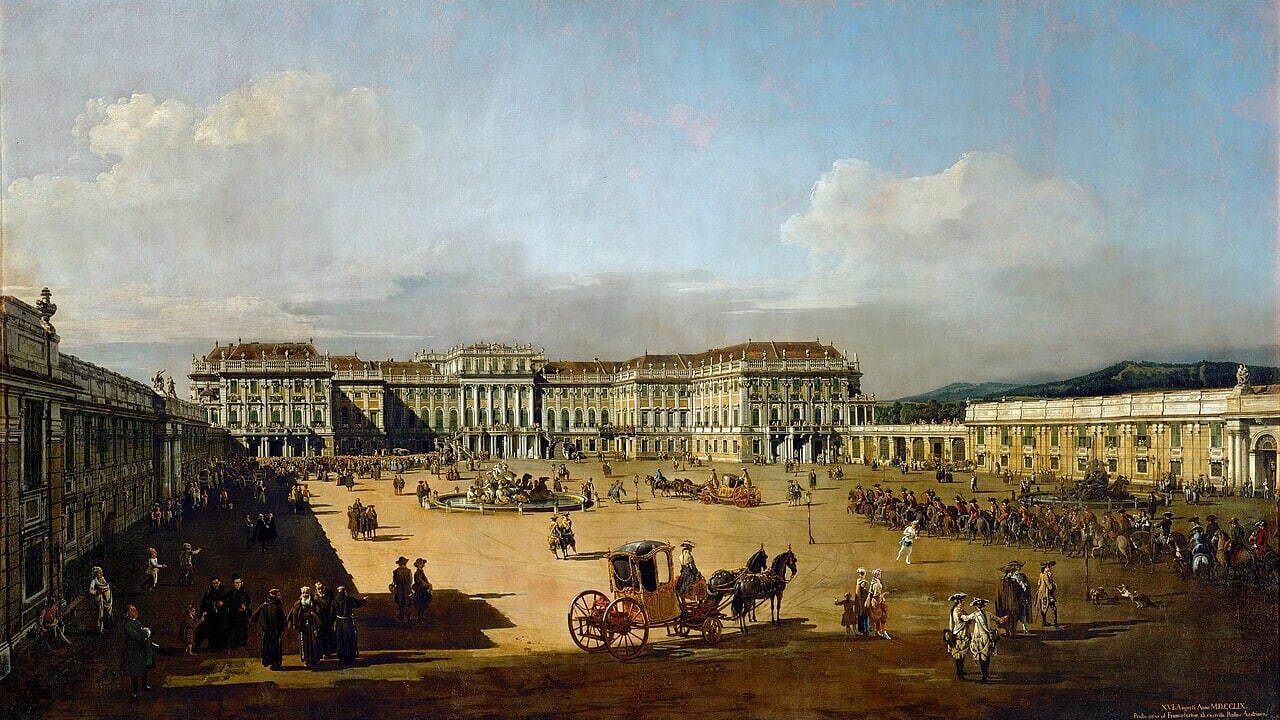
Emperor Joseph II was hosting visiting nobility at Vienna’s Schönbrunn Palace. The festivities included a duel between two competing forms of opera. At one end of the room was Mozart’s Der Schauspieldirektor, K. 486 (“The Impresario”), representing German singspiel. At the other end, Antonio Salieri represented Italian opera buffa with Prima la musica e poi le parole (“First the Music, then the Words”).
Mozart described his farcical contribution as “comedy with music.” The story involves an impresario who hires two dramatic actresses who argue over who will get the prime role and the most pay. German born-British record producer Erik Smith described a hilarious scene in which “each lady sings about the nobility of her art while trying to defeat her rival with ever higher notes.”
Mozart’s Overture is a breathless romp in C major. From the opening bars, the music explodes with festive energy and scurrying anticipation. The violins begin the second theme and are joined by a zany cast of conversing instrumental voices, from the oboe and horn to the low strings. In the development section, fragments of the theme ring out across the orchestra amid vibrant counterpoint. Anticipating the finale of Mozart’s final symphony (the “Jupiter”), each is a bold, joyful musical “announcement.”
Here is Nikolaus Harnoncourt’s exhilarating 1987 recording with the Royal Concertgebouw Orchestra:
Recordings
- Mozart: Der Schauspieldirektor, K. 486 Overture, Nikolaus Harnoncourt, Royal Concertgebouw Orchestra Amazon
Featured Image: “The Imperial Pleasure Palace Schönbrunn, Courtyard Side” (1760), Bernardo Bellotto