
Purcell’s “Sound the Trumpet”: Celebratory Music for a Royal Birthday
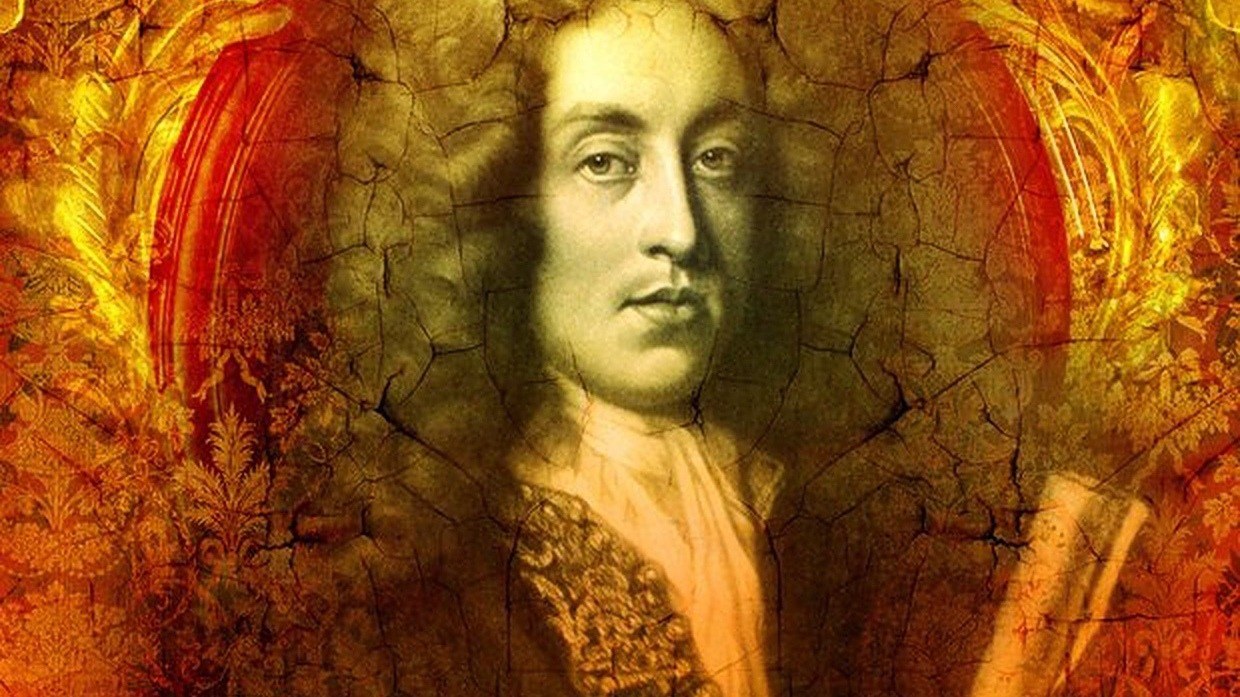
In the festive countertenor duet, Sound the Trumpet, English Baroque composer Henry Purcell (1659-1695) did not use actual trumpets. Instead, he called upon the singers to imitate the regal, antiphonal calls of these “instruments of joy.” First performed in April of 1694, this music is part of Come Ye Sons of Art, Z.323, the Ode for Queen Mary’s Birthday. The text is attributed to Nahum Tate, who served as poet laureate at …
Read more

Purcell’s Three Fantasias in Four Parts (Nos. 10-12): Jordi Savall, Hespèrion XX

In the summer of 1680, five years before the birth of J.S. Bach, the twenty-one year old Henry Purcell composed a collection of fifteen Fantasias for the Viols. At the time, viol consort music was falling out of fashion. The Fantasias received little attention and remained unpublished until 1927. Now, these brief and sublime studies in polyphony, scored for between three and seven voices, are considered to be precursors to Bach’s Musical …

Read more

La Centifolia’s “Ciaccona!”: Music of Purcell and Pachelbel

Although its origins are murky, the chaconne appears to have originated in South America as a swirling dance which was “wild, fast, cheerful and often sung.” (Leila Schayegh) It was characterized by suggestive movements and mocking texts. (Alexander Silbiger) In the sixteenth century, conquistadors brought the chaconne to Spain. Evolving into a stately Baroque dance in triple meter, it spread quickly throughout Europe, and gained popularity with both aristocrats and the general public. …

Read more

Purcell’s Trio Sonata in F Major, Z 810: The “Golden” Sonata

Henry Purcell (1659-1695), the most significant English composer of the Baroque period, is believed to have spent his entire life in Westminster (now part of London). As a youth, he was a chorister at the Chapel Royal of the monarchs. He attended Westminster School and became a copyist at Westminster Abbey. Later, Purcell became the eminent organist of the Chapel Royal, as well as Westminster Abbey. Following his death at 36, he was …

Read more

Purcell’s “Hear My Prayer, O Lord”: VOCES8

Westminster Abbey was a prominent fixture in the life of Henry Purcell. Purcell was born in 1659 in a notorious slum known as The Devil’s Acre, which fell in the shadow of the soaring Gothic edifice. At the age of twenty, he succeeded the composer John Blow to become Organist and Master of the Choristers for Westminster Abbey. Purcell’s grave lies in the Abbey’s north aisle near the historic location of the organ. …

Read more

Purcell’s Trio Sonata in G Minor, Z 807: A Monumental Chaconne

Henry Purcell (1659-1695), the most significant English composer of the Baroque period, left behind dramatic works such as Dido and Aeneas and The Fairy Queen, as well as sacred music and instrumental fantasias. Equally rich, yet perhaps less well known, are Purcell’s Trio Sonatas. Composed around 1680, these include the Twelve Sonatas in Three Parts (Z 790-801) and the Ten Sonatas in Four Parts (Z 802-811). The second collection was published posthumously in 1697 at a time when …

Read more

Three English Phantasies: Music of Vaughan Williams, Purcell, and Britten

The fantasia is a genre which spans more than four hundred years of English music. It flowered in the Renaissance and Baroque periods, with the viol consort music of composers such as William Byrd, John Jenkins, and Henry Purcell. Emerging from the word fancy, these compositions are free in form and feature an intricate, polyphonic dialogue between instruments. A predecessor to sonata form, the fantasia grew out of madrigals and vocal motets. Twentieth …

Read more