
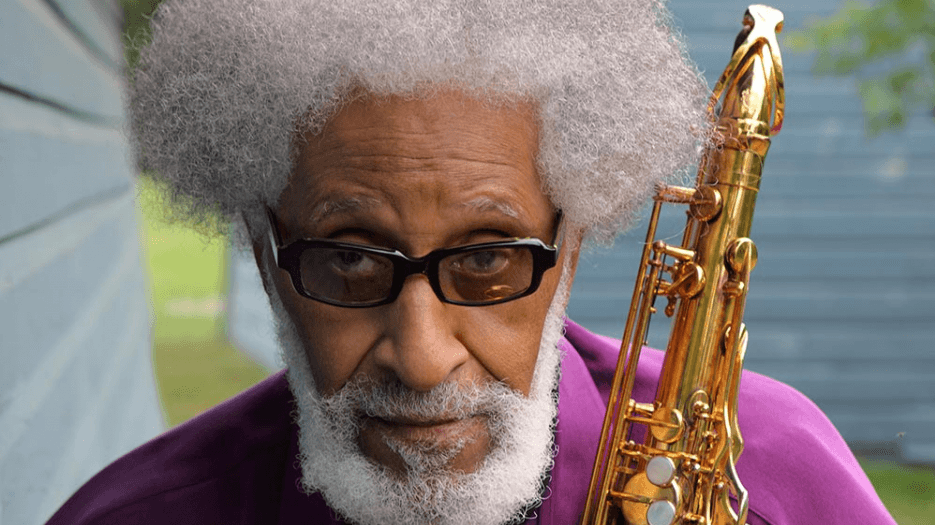
Remembering Sonny Rollins

Sonny Rollins, one of the greatest jazz saxophonists of all-time, passed away on Monday at his home in Woodstock, New York. He was 95. 

A statement on his website included this quote of Rollins reflecting on death:

I think when the creative person ends, he continues in the next existence. I’m a person who believes this life isn’t the be-all and end-all of everything. A spiritual person doesn’t feel like that.

Rollins grew up in Harlem close to the prominent jazz venues of the Savoy Ballroom and the Apollo Theatre. His style was influenced by the harmonic sophistication of bebop, but pushed the envelope into new territory including jazz fusion. One of Rollins’ earliest fans was Miles Davis who described him as “an aggressive, innovative player who always had fresh musical ideas.” In 1955, Rollins joined the Clifford Brown-Max Roach Quintet. “His trademarks became a caustic, often humorous style of melodic invention, a command of everything from the most arcane ballads to calypsos, and an overriding logic in his playing that found him hailed for models of thematic improvisation.”

“The music I play is too big to be put into any one style,” Rollins told an interviewer in 2002. “Every time I pick up the horn, I want to hear something fresh.”

St. Thomas (1956)

Blue 7 (1957)

Without A Song (The 9/11 Concert)

Recordings

About Timothy Judd

A native of Upstate New York, Timothy Judd has been a member of the Richmond Symphony violin section since 2001. He is a graduate of the Eastman School of Music where he earned the degrees Bachelor of Music and Master of Music, studying with world renowned Ukrainian-American violinist Oleh Krysa.

The son of public school music educators, Timothy Judd began violin lessons at the age of four through Eastman’s Community Education Division. He was a student of Anastasia Jempelis, one of the earliest champions of the Suzuki method in the United States.

A passionate teacher, Mr. Judd has maintained a private violin studio in the Richmond area since 2002 and has been active coaching chamber music and numerous youth orchestra sectionals.

In his free time, Timothy Judd enjoys working out with Richmond’s popular SEAL Team Physical Training program.

3 thoughts on “Remembering Sonny Rollins”

  1. Oh my, and a saxophone collossus he was! The story of him that’s burned into my mind is his retreat from the scene and subsequent two years of practicing before he felt ready to return. An artistic reset.

    Here’s the story: In the summer of 1959, Rollins sought a place to practice his tenor saxophone for up to 14–15 hours a day without disturbing his pregnant neighbor in his Manhattan apartment. He discovered the pedestrian walkway of the Williamsburg Bridge was nearly deserted, offering “noisy solitude” and open space to improve his volume and wind capacity. He practiced there almost daily for two years, until the fall of 1961, describing the experience as “spiritual” and akin to being “close to the sky.” This sabbatical helped him reinvent his playing, leading to the release of the acclaimed album The Bridge in 1962.

    RIP brother Sonny.

    Reply
  2. What a long life Sonny Rollins lived. The last survivor of the 1950s scene, when Jazz was still a significant cultural force.

    As a drummer, what I most enjoyed in Rollins’s solos was how his improvisation was often on the rhythms of phrases, rather than the pitches.

    Reply
  3. I loved listening to the tracks and reading the backstory and also the comments! The first time I ever heard “St. Thomas” was in a 90’s movie called “Working Girl.” Melanie Griffith crashes a wedding reception and meets Harrison Ford. They dance. During the cocktail hour, the band plays “St. Thomas.” It was the first time I’d ever heard the tune and it stuck with me. So I searched for the name online and found the definitive version at Tower Records. This is such a lovely tribute. RIP Sonny Rollins.

    Reply

Leave a Comment