
Robert Schumann composed the dreamy and mercurial Fantasiestücke (“Fantasy Pieces”), Op. 73 in a burst of creativity over the course of two days in February of 1849.
Set in A major and A minor, the work was first conceived for the melancholy, nostalgic voice of the clarinet. Later, Schumann indicated that the clarinet part could be performed on violin or cello.
The three movements unfold in A-B-A song form and flow together without pause. They are interrelated thematically. Schumann biographer John Daverio described them as “cycles of poetic miniatures, each unified…by a central tonic and overall affective profile.” Originally titled Soiréestücke (“Night Pieces”), the Fantasiestücke title was inspired by the work of German Romantic fantasy author E.T.A Hoffmann.
The first movement, Zart und mit Ausdruck (“Tender and with expression”) establishes the solo clarinet as a soulful protagonist, enveloped in the flowing lines of the piano. At moments, there are foreshadowings of the music of Brahms.
The second movement, Lebhaft, leicht (“Lively, light”) is a flowing intermezzo. Its restless A section gives way to a playful dialogue involving ascending scales between instruments.
The final movement is titled Rasch und mit Feuer (“Quick and with fire”). It is the fire of joy, passion, and adventure. An aspiring ascending motif repeats obsessively, each time leaving the door open for a new far-flung musical excursion. At the end of the movement, the door closes with a sudden, emphatic resolution.
I. Zart und mit Ausdruck:
II. Lebhaft, leicht:
III. Rasch und mit Feuer:
Recordings
- Schumann: Fantasiestücke, Op. 73, Jörg Widmann, Dénes Várjon Amazon
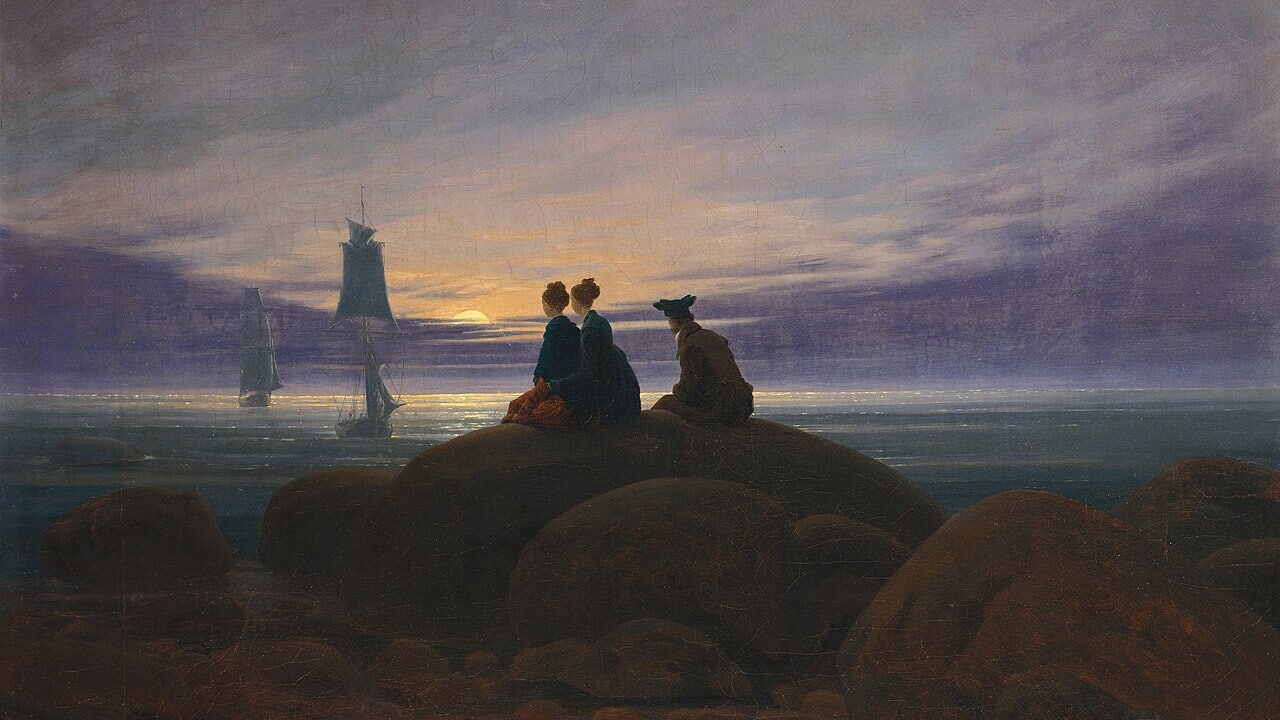
Featured Image: “Moonrise Over the Sea” (1822), Caspar David Friedrich
It’s my first time hearing this piece. I love the pairing of clarinet and piano and the fluidity of the instruments. It’s great sound and very dreamy, especially the first movement!