
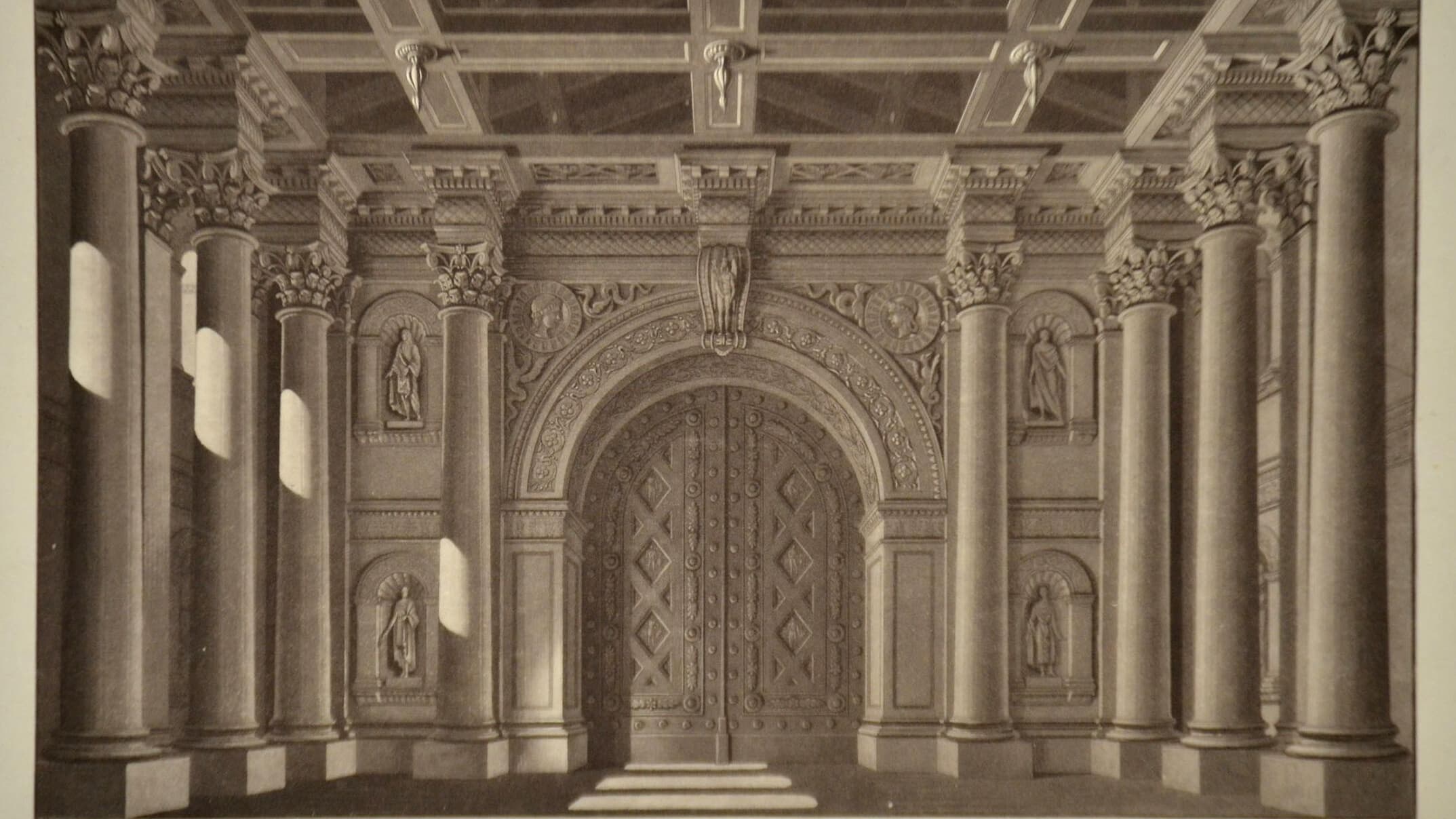
Friedrich Schiller’s 1803 tragedy, The Bride of Messina, tells the story of a bitter rivalry between brothers who have fallen in love with the same woman, Beatrice. She turns out to be their long-lost sister. Amid jealous discord and a clash between paganism and Christianity, the turbulent love triangle ends in a murder-suicide.
The two-act play was unusual and controversial at the time due to Schiller’s incorporation of a Greek chorus, a device which reached back to the dramas of antiquity.
The turbulent story inspired Robert Schumann to compose the concert overture, The Bride of Messina, Op. 100. It begins with a sudden, thunderous burst of energy, followed by hushed suspense. The violas add ghostly interjections. The opening measures contain echoes of Beethoven’s dramatic overtures. Ultimately, it is infused with a restless Romanticism distinct to Schumann, with an uneasy blend of majesty and obsession. For some listeners, the solo clarinet represents Donna Isabella, the mother who attempts to broker peace between her sons.
Documenting the 1851 premiere in Dusseldorf, the newspaper, Düsseldorfer Zeitung, reported that the final bars were met “without any trace of applause.” Soon after, Schumann lost his music director position in the city. Three years later, he was committed to the mental institution where he died at age 46.
Recordings
- Schumann: The Bride of Messina, Op. 100: Ouverture, Heinz Holliger, WDR Sinfonieorchester Köln Amazon
Featured Image: Karl Friedrich Schinkel Stage Design for the Tragedy ‘The Bride of Messina’, Act I (1874)