Ives’ “General William Booth Enters into Heaven”: A Heavenly Procession

William Booth was the English Methodist minister who, along with his wife, founded the Salvation Army in 1865. The charitable organization established a military-like structure, and the highest ranking officer, the “General,” is purported to be chosen by God. Booth’s death in 1912 inspired American poet Vachel Lindsay to write a colorful ballad depicting the General’s entry into heaven. It is a grand procession which “Booth led boldly with his big bass …

Read more

Aulis Sallinen’s “Winter Was Hard”: Ode to a Bleak Finnish Landscape

Humor, stoicism, and Scandinavian winter gloom emerge in the brief song, Winter Was Hard, Op. 20 (Vintern var Hård) by Finnish composer Aulis Sallinen (b. 1935). Composed in 1969, the song became the title track of a 1988 album by the Kronos Quartet. Their version, featuring the San Francisco Girls Chorus, includes a pump organ: Here is another version featuring the Tapiola Choir: A translation of the text: There wasn’t much for the ducks. …

Read more

Remembering Jubilant Sykes

American baritone Jubilant Sykes passed away on December 8 at the age of 71. He was the victim of an apparent domestic homicide. A classically trained, Grammy-nominated vocalist, Sykes drew on gospel, jazz and folk influences. He collaborated with a wide array of artists including: Julie Andrews, Renée Fleming, Josh Groban, and Brian Wilson, and appeared on “such diverse stages as the Metropolitan Opera, Carnegie Hall, Kennedy Center, Deutsche Oper Berlin, Arena …

Read more

Schubert’s “Schwanengesang,” “Kriegers Ahnung”: Warrior’s Foreboding

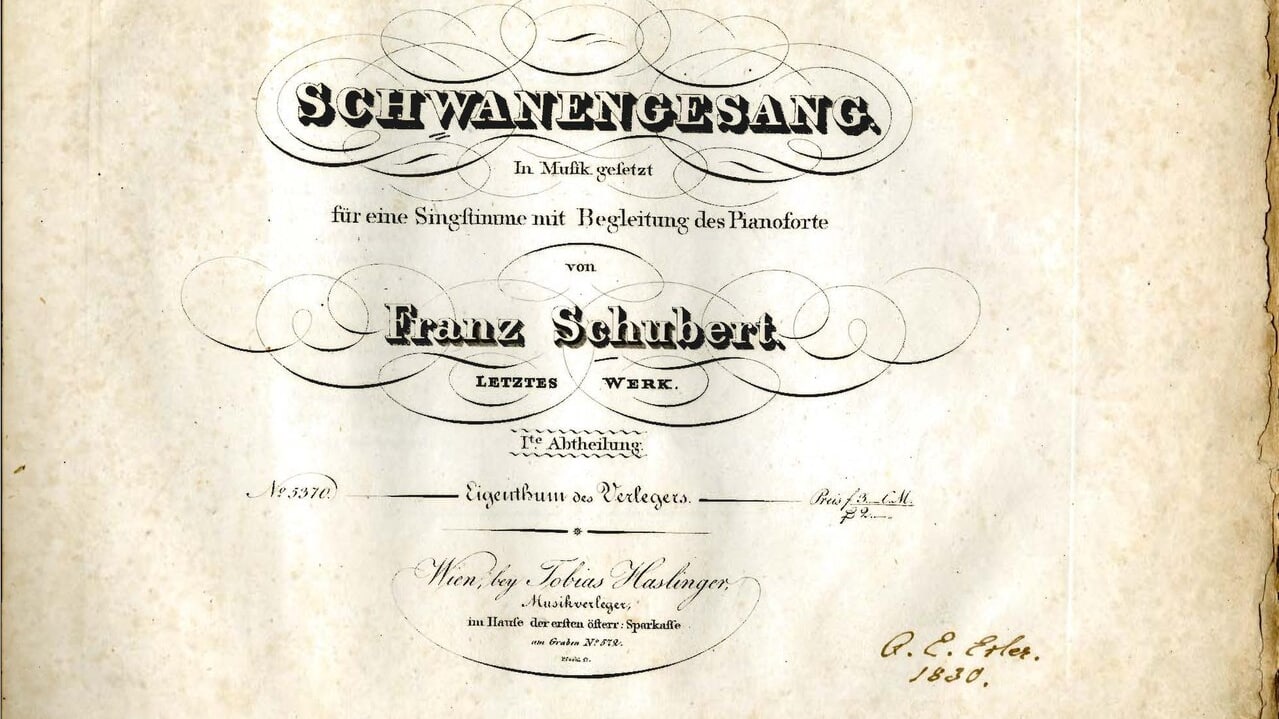
Franz Schubert composed Schwanengesang (“Swan Song”), D. 957, a cycle of 14 posthumously published songs, in October of 1828, a month before his death. The haunting second song, Kriegers Ahnung (“Warriors Foreboding”), foreshadows Mahler’s Wo die schönen Trompeten blasen from Des Knaben Wunderhorn. The text by Ludwig Rellstab is the ghostly soliloquy of a soldier who fears imminent death on the battlefield, and who longs to return to his beloved. The piano’s desolate …

Read more

Mahler’s “Des Knaben Wunderhorn,” “Wo die schönen Trompeten blasen”: A Ghostly Nocturnal Vision

Songs gave rise to symphonies during Gustav Mahler’s “Wunderhorn years.” This was the period from 1887 to 1904 when Mahler composed his first four symphonies, all of which are rooted in nature and song. In some cases, songs provided the seeds for symphonic movements. The texts for Mahler’s twelve-song cycle, Des Knaben Wunderhorn (“The Boy’s Magic Horn”) were based on a collection of anonymous German folk poems of the same title, compiled and …

Read more

Ives’ “The Pond”: A Dreamy Elegy

Composed by Charles Ives in 1906, The Pond is a shimmering, atmospheric fragment, or, in the words of the composer, “a song without voice.” Evocative of a rippling pond on a lazy afternoon, the work is so brief that it unfolds as a fleeting dream. The Pond was the composer’s nostalgic elegy for his father, George Ives (1845–1894), a cornet player and bandmaster in the Union Army during the Civil War. In Ives’ musical fragment, …

Read more

Ives’ “Tom Sails Away”: Childhood Memories from Wartime

In 1917, Charles Ives composed a series of songs in response to the entrance of the United States, that year, into the First World War. The final song, Tom Sails Away, involves a dreamy childhood memory, experienced as a vivid hallucination. The text, written by Ives, begins with images of a springtime sunset over a New England mill town. The hustle and bustle of the day has faded. The final haunting moments …

Read more