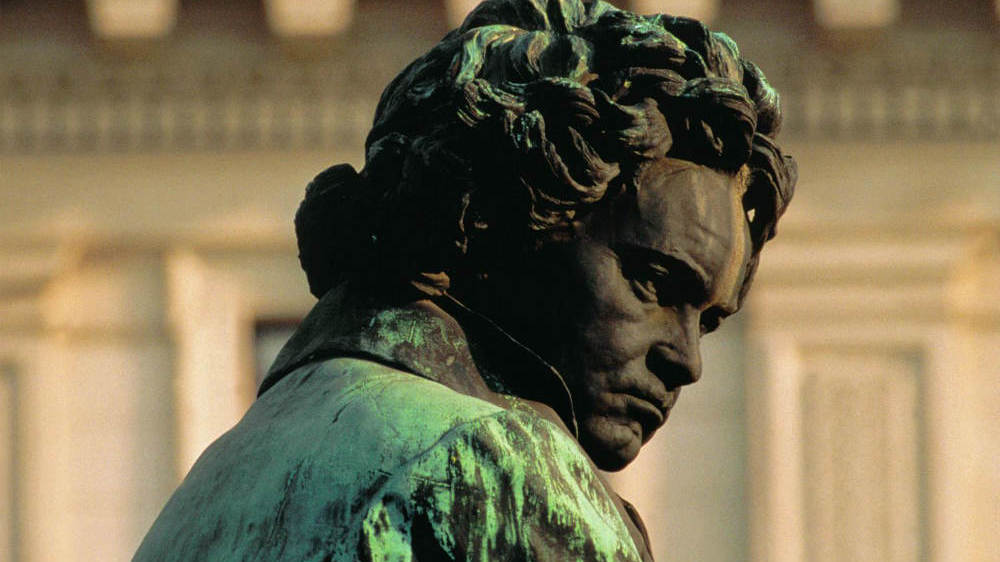
Beethoven’s “Emperor” Concerto: Monumental and Heroic

Beethoven’s Fifth Piano Concerto begins with a bold and unexpected announcement. Four chords in the orchestra, outlining the most elemental harmonic progression (I-IV-V-I), stand as mighty pillars. Each initiates an expansive cadenza from the solo piano. A cadenza at the beginning of a concerto? This is not what the first audiences would have been expecting. These first bars establish the piano as a heroic, convention-defying protagonist. The orchestra launches into the expected introduction only …

Read more

Melodic Siblings: Mozart’s “Dove Sono” and the “Coronation Mass”

It’s one of Mozart’s most serenely beautiful melodies, evoking quiet dignity, nostalgia, and underlying sadness. “Dove sono i bei momenti” is sung by the Countess in Act III of Le nozze di Figaro (The Marriage of Figaro). Amid all of the craziness, scheming, and entanglements of this whirlwind “day of madness,” she pauses to lament her circumstances—loneliness, betrayal, and humiliation as a result of her husband’s serial infidelity. In the shifting stream of consciousness …

Read more

Beethoven’s Coriolan Overture: A Turbulent and Tragic Drama

The Viennese dramatist Heinrich Joseph von Collin’s 1804 tragedy, Coriolan, depicts the ultimate conflict between war and an alternate path of compassion, peace, and transcendence. In the story, the proud and vengeful general Gaius Marcius Coriolanus, filled with feelings of betrayal, returns to Rome with an army made up of his former enemies, determined to invade and destroy the city. Reaching Rome’s gates, he abandons his plan at the pleadings of his mother, …

Read more

C.P.E. Bach’s D Major Symphony, Wq. 183/1: A Wildly Adventurous Romp

Daring and wildly adventurous…These are words which could describe Symphony No. 1 in D Major, Wq. 183/1 by Carl Philipp Emanuel Bach (1714-1788). C.P.E Bach, the second surviving son of J.S. Bach, wrote this music (scored for two flutes, two oboes, bassoon, two horns, strings, and continuo) around 1775. It’s a thrilling Sturm und Drang rollercoaster which seems to have influenced similar symphonies by Haydn and Mozart. Perhaps the “craziness” of this music even set the stage …

Read more

Haydn’s Symphony No. 39: “Tempesta di mare”

Franz Joseph Haydn’s Symphony No. 39 takes us on a wildly exhilarating and tempestuous ride. It’s no wonder that this symphony, written in 1767 around the time Haydn became Kapellmeister for Prince Nikolaus Esterházy, earned the poetic nickname, “Tempesta di mare,” or “storm at sea.” Set in a turbulent G minor, it is an early example of Sturm und Drang (translating literally as “storm and drive”), an artistic movement which swept through music and literature from the 1760s …

Read more

Beethoven’s “Kreutzer” Sonata: Five Key Recordings

Beethoven’s Violin Sonata No. 9, Op. 47—better known as the “Kreutzer” Sonata—was first performed on May 24, 1803. 216 years ago today, Beethoven and the Afro-European violinist George Bridgetower (1778-1860) premiered this convention-shattering music at Vienna’s Augarten Theatre. Beethoven was so late in completing the manuscript that Bridgetower was forced to sightread the performance, at times looking over the composer’s shoulder at the full score. Originally, the manuscript was inscribed with the lighthearted …

Read more

Beth Levin Plays Beethoven’s Last Three Piano Sonatas

Beethoven said that his final three piano sonatas, written between 1820 and 1822, were conceived “in a single breath.”  In April, 2012, pianist Beth Levin gave what has been described as a “revelatory” performance of these three Sonatas (Op. 109, 110, and 111) in the intimate setting of New York’s Faust Harrison Pianos. Luckily, this special concert, performed on an 1887 Steinway, was recorded and released a year later on the Navona label (“A Single Breath: …

Read more