Bach’s Chaconne: Midori at Köthen Castle

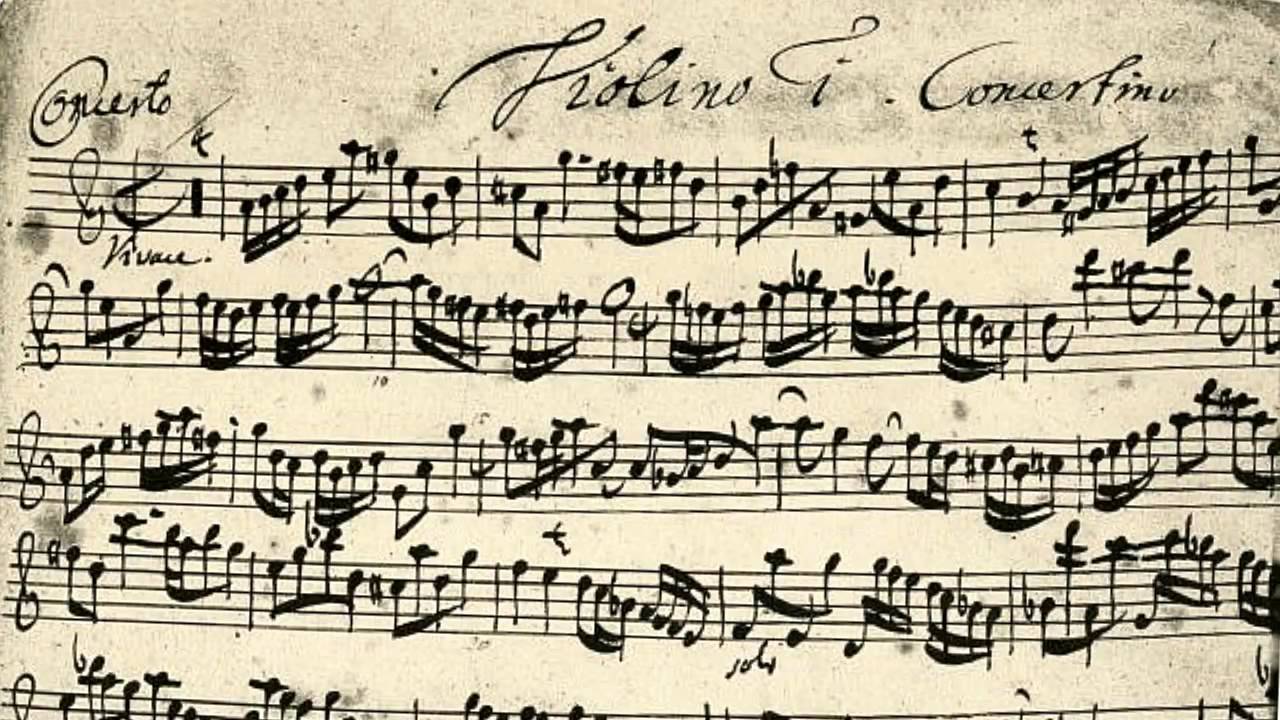
“Monumental” is a word that has been used to describe J.S. Bach’s Chaconne. This is the fifth and final movement of the Partita No. 2 in D minor (BWV 1004) for solo violin, written sometime between 1717 and 1720. Emotionally, there is a sense of transcendence when we arrive at this mighty set of 64 variations on a repeating bass line. It’s approximately as long as the four dance movements which precede …

Read more

Remembering Lynn Harrell

The American cellist Lynn Harrell passed away unexpectedly on Monday. He was 76. Years ago when I was a student one summer at the Chautauqua Institution, I attended Harrell’s masterclass and recital. His down-to-earth, irreverent sense of humor, powerful, singing tone, and profound musicianship are etched in my memory. During a career that spanned six decades, Lynn Harrell appeared regularly with the world’s top orchestras. He will be remembered also as an accomplished …

Read more

Bach’s Fantasia and Fugue in G Minor, BWV 542: A Dark and Tempestuous Adventure

In 1720, J.S. Bach applied for the post of music director at St Jacob’s Church in Hamburg. As part of the audition, Bach performed an organ recital lasting more than two hours. In the end, establishment politics prevented Bach from winning the job, but the level of his playing left the audience stunned. After hearing Bach’s improvisations, the 97-year-old Dutch organist, Johann Adam Reinken, said, “I thought this skill had died out, …

Read more

Bach’s St John Passion: A Divine Drama

J.S. Bach’s St John Passion is a haunting and dramatic musical depiction of the Passion of Christ, as told in the Gospel of John. The story of Jesus’ capture, judgment, and crucifixion, as outlined in biblical passages from John 18 and 19, are presented by the solo tenor (the Evangelist). A cast of other singers perform the roles of Jesus, Pilate, and the disciples, while the four-part choir represents the people at large. …

Read more

Bach’s Orchestral Suite No. 1 in C Major: Embracing and Transcending Fashion

The Overture which opens J.S. Bach’s First Orchestral Suite was built on a well-established, preexisting model. You could even call it a formula. It was the stylish “French Overture,” dating back to the 1650s, which opened the ballets of Jean-Baptiste Lully (1632-1687), a composer who spent most of his life employed by the court of Louis XIV. The French Overture begins with a majestic slow section consisting of stately dotted rhythms fit for …

Read more

J.S. Bach and the Joy of G Major

Throughout the music of J.S. Bach, G major seems to be associated with a distinct sense of joy and deep-rooted contentment. For example, consider the Fantasia in G Major for Organ, BWV 572, which opens in the instrument’s highest and most sparkling register with figures that skip along with an infectious, playful exuberance. This amazing piece, which we explored in a previous post, proceeds on into a massive five-voice chorale which concludes with a mighty …

Read more

Remembering Peter Serkin: Five Essential Recordings

The American pianist Peter Serkin passed away on Saturday after a battle with pancreatic cancer. He was 72. Serkin was part of a distinguished musical lineage. His father was Rudolf Serkin, the legendary Bohemian-born American pianist and director of the Curtis Institute of Music. His maternal grandfather was the German violinist and conductor, Adolf Busch. As if to throw off the burden of this heritage, Serkin was something of a musical maverick. Following …

Read more