
The Prelude to the first act of Wagner’s 1850 opera, Lohengrin, unfolds as a gradual cosmic crescendo before fading again into silence.
It begins in the highest register of the orchestra with a shimmering, prolonged A major chord. Angelic harmonics in divided solo violin lines alternate and overlap with woodwind voices to create a dreamy shifting kaleidoscope of tonal color. At moments, the familiar instruments of the orchestra seem to dissolve into new, unidentifiable celestial sounds. As new instrumental voices enter, the music becomes lower and increasingly majestic. In the context of the opera, this process symbolizes the angelic descent of the Holy Grail to Earth. In the afterglow of the climax, there is a passage filled with quiet tension in which the violins in the upper register descend as the bass rises. The Prelude closes as it began with a kaleidoscopic A major chord.
Lohengrin is based on a medieval German legend. The fairy tale story involves the distressed Elsa (unfairly accused of murdering her brother, the rightful heir to the kingdom) and Lohengrin, a disguised Knight of the Holy Grail who comes to her aid on a boat drawn by a swan.
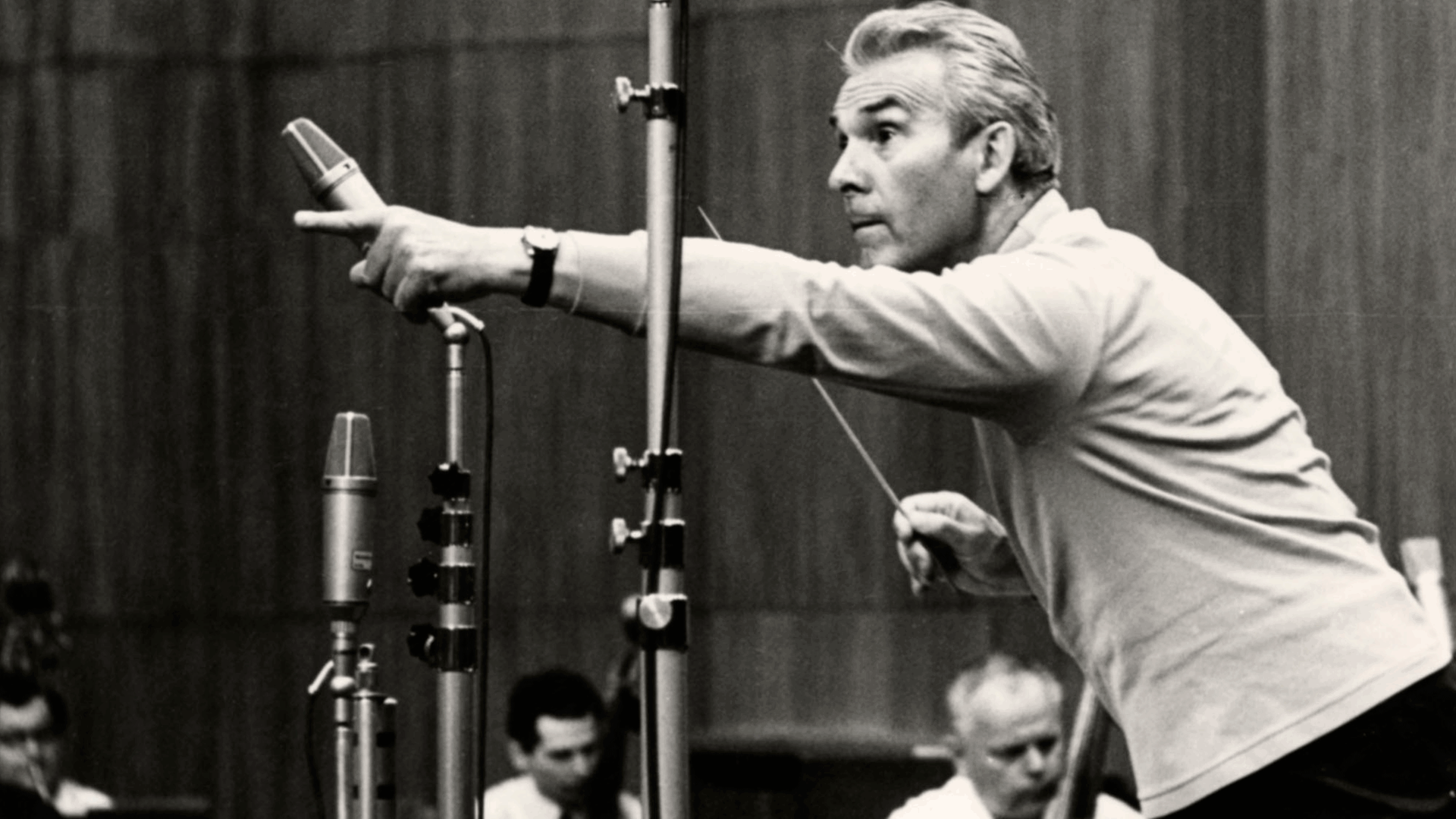
German conductor Rudolf Kempe’s 1963 studio recording of Lohengrin with the Vienna Philharmonic has been called “one of the greatest accounts of the opera ever committed to disc.” Here is the Prelude to Act 1:
Recordings
- Wagner: Lohengrin, WWV 75, Rudolf Kempe, Vienna Philharmonic Classical Music Reference Recording
Featured Image: photograph by W.Wahrig