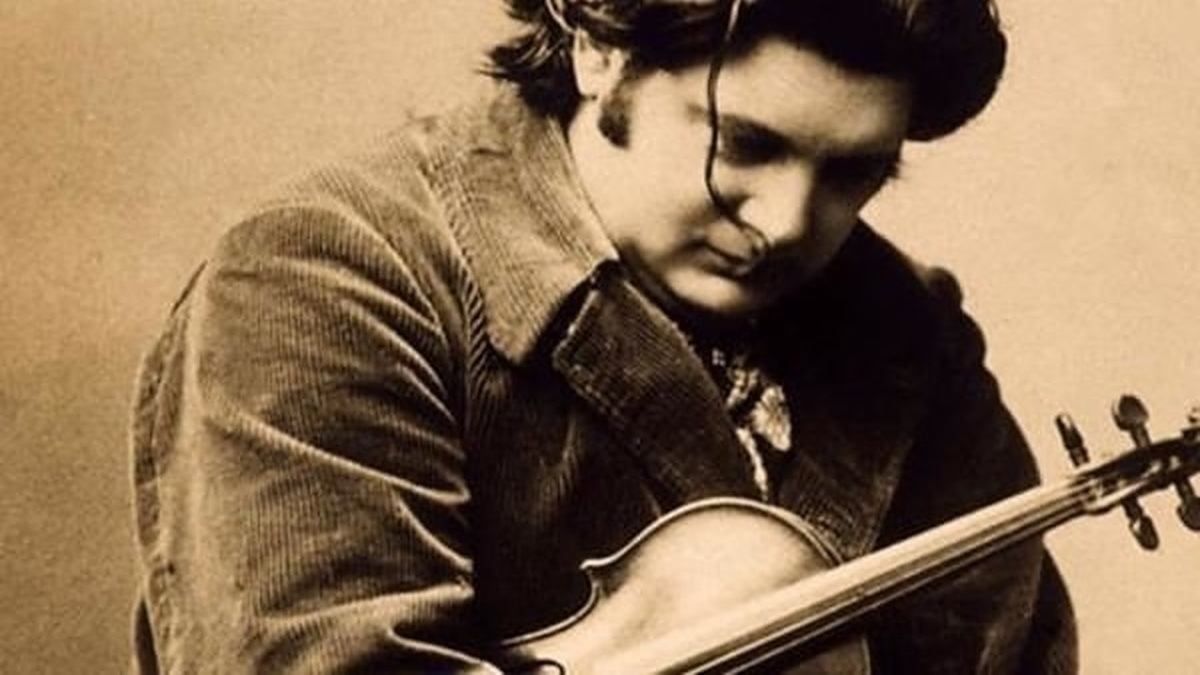
Sofia Gubaidulina’s “Fairytale Poem”: The Dreams of a Piece of Chalk

In her youth, the Soviet-Russian composer, Sofia Gubaidulina (b. 1931), was censured by the cultural authorities and urged to abandon her “mistaken path.” It was a path which led far from the conventions of Soviet Realism to explore 12-tone serialism, alternative tunings, and the improvisational Eastern influences of her native Tatarstan. With gratitude, Gubaidulina remembers her 1959 meeting with Dmitri Shostakovich in which the older composer said, “My wish for you is that …

Read more

Prokofiev’s First Piano Concerto: Enter the Enfant Terrible

Piano Concerto No. 1 in D-flat Major, Op. 10 is music of the audacious, young Sergei Prokofiev. Completed in 1911 when the 22-year-old composer was still a student at the Saint Petersburg Conservatory, the Concerto’s brash, spirited energy elicited strong public reactions. The August 7, 1912 premiere in Moscow marked Prokofiev’s first appearance with an orchestra and showcased his dazzling keyboard virtuosity. In a letter, Prokofiev recalled that “the outward success was …

Read more

Debussy’s “Bruyères” from Préludes, Book 2: Krystian Zimerman

Composed between 1909 and 1913, Claude Debussy’s twenty four solo piano Préludes are divided into two books. Unlike the Preludes of Chopin or J.S. Bach’s The Well-Tempered Clavier, they do not form a sequential harmonic procession. Instead, they float ephemerally between traditional tonality and modal harmony, and the pentatonic and whole tone scales. They emerge as dreamy, atmospheric vignettes. Bruyères is the fifth Prélude from Book II. Translating as “heather,” it “evokes pastoral bliss, an Arcadian …

Read more

Elgar’s “Cockaigne” (“In London Town”): Portrait of a Dynamic City

In 1777, the polymath Samuel Johnson wrote, famously, “When a man is tired of London, he is tired of life; for there is in London all that life can afford.” Sir Edward Elgar’s 1901 overture Cockaigne (In London Town), Op. 40, is a glittering portrait of this dynamic city on the Thames. In medieval mythology, Cockaigne represented an imaginary utopia filled with endless physical comforts, idleness, and pleasure. In the early years of the …

Read more

Kate Royal Sings Britten: “How Beautiful It Is” from “The Turn of the Screw”

Benjamin Britten’s 1954 chamber opera, The Turn of the Screw, is a spine-chilling psychological thriller. Based on Henry James’ 1898 gothic horror novella of the same name, it tells the story of a young, inexperienced governess who is sent to a grand English country estate to care for two orphaned children. Their guardian has left strict instructions that she is forbidden to write to him, to inquire about the history of the house, …

Read more

Stravinsky, Hindemith, and Poulenc: Three Twentieth Century Pastorales

With roots in the Baroque period, the musical pastorale evokes a serene, bucolic landscape. Often, it rolls along in a gentle 6/8 time and suggests the simple, free-floating melodies and drones of a shepherd’s bagpipes. J.S. Bach’s Pastorella In F Major, BWV 590 for organ, the final movement of Corelli’s “Christmas” Concerto, and the Pastoral Symphony from Handel’s Messiah are famous examples. The sound world of the twentieth century was dominated by …

Read more

Stravinsky’s “The Rake’s Progress”: “No Word From Tom,” Dawn Upshaw

Igor Stravinsky’s 1951 opera, The Rake’s Progress, is a morality play with Faustian undertones. Its English-language libretto, written by W. H. Auden and Chester Kallman, tells the story of Tom Rakewell, a man who abandons his fiancée, Anne Trulove, to pursue a life of gambling and debauchery in the brothels of eighteenth century London. Urged on by Nick Shadow, a shady character who turns out to be the Devil in disguise, Tom ends up …

Read more