Remembering Charles Wuorinen

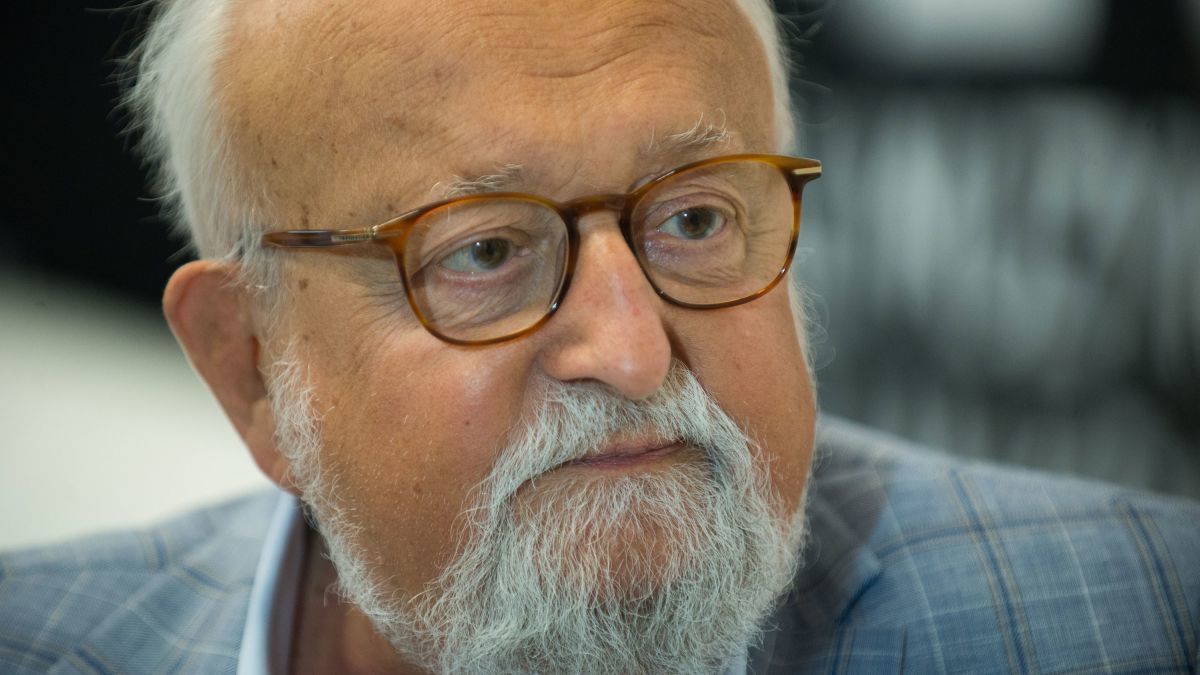
The American composer, Charles Wuorinen, passed away last week. He was 81. In 1970, Wuorinen was awarded a Pulitzer Prize for his electronic composition, Time’s Encomium. (Until 2017, he held the distinction of being the youngest person ever to win the music prize). Other works include eight symphonies, four piano concertos, and two operas. Throughout his life, Wuorinen was an unapologetic proponent of the twelve-tone system of composition, in which the twelve pitches …

Read more

“Salvation is Created”: The Meditative Sacred Music of Pavel Tschesnokoff, VOCES8

Spaséñiye, sodélal (“Salvation is Created”), by the Russian composer Pavel Tschesnokoff (1877-1944), is a Communion Hymn intended for the Russian Orthodox liturgy for Friday. Its text (“Salvation is created, in midst of the earth, O God, O our God. Alleluia”) is based on Psalm 74. It is a setting of a Kievan chant melody. Written in 1912, it is one of the last sacred works composed by Pavel Tschesnokoff. Following the Russian Revolution, the Soviet Union’s …

Read more

Stravinsky’s “Song of the Nightingale”: A Shimmering, Impressionist Tone Poem

In 1908, the 26-year-old Igor Stravinsky, still a student of Rimsky-Korsakov at the St. Petersburg Conservatory, completed the first act of an opera, Le Rossignol (“The Nightingale”), based on the fairy tale by Hans Christian Andersen. When Sergei Diaghilev commissioned Stravinsky to write the ballet score for The Firebird, the work was set aside. Only in 1914, after the completion of The Firebird, Petrushka, and The Rite of Spring, did Stravinsky return to the project. Listening to the complete …

Read more

Takemitsu’s “Quotation of Dream”: Aftertones of Debussy

Fragments of Debussy’s La Mer emerge and evaporate throughout Quotation of Dream (1991) by the Japanese composer, Tōru Takemitsu (1930-1996). The piece, which the composer described as “schizo-eclectic,” is a virtual concerto for two pianos and orchestra. The subtitle, Say sea, take me!, is a reference to a poem by Emily Dickinson. La Mer‘s motifs run through the DNA of this shimmering, post-impressionist work. The haunting and mysterious piano chords in the beginning return in the last bars, …

Read more

Remembering Peter Serkin: Five Essential Recordings

The American pianist Peter Serkin passed away on Saturday after a battle with pancreatic cancer. He was 72. Serkin was part of a distinguished musical lineage. His father was Rudolf Serkin, the legendary Bohemian-born American pianist and director of the Curtis Institute of Music. His maternal grandfather was the German violinist and conductor, Adolf Busch. As if to throw off the burden of this heritage, Serkin was something of a musical maverick. Following …

Read more

Philip Glass’ “Mad Rush”: Time is Relative

A happy birthday to the American composer, Philip Glass, who turns 83 today. In the meditative minimalism of Glass’ 1979 keyboard work, Mad Rush, time becomes relative. The piece was originally conceived as being of “indefinite length.” It was performed on the occasion of the Dalai Lama’s first public address in North America at New York’s Cathedral of Saint John the Divine. Later, it was used to accompany a ballet by Lucinda Childs. The …

Read more

Henry Purcell’s “Fantasia Upon One Note” and its Twentieth Century Aftertones

How many ways can you harmonize three notes? You might find this question especially pertinent after listening to an extraordinary passage from the second movement of Sergei Rachmaninov’s Fourth Piano Concerto. Three descending notes (E, D, C) are repeated throughout this melody, filled with nostalgia and quiet lament, each time wrapped in new harmonic garb. Fantasia Upon One Note for 5 viols in F major, Z. 745, written around 1680 by the English baroque …

Read more