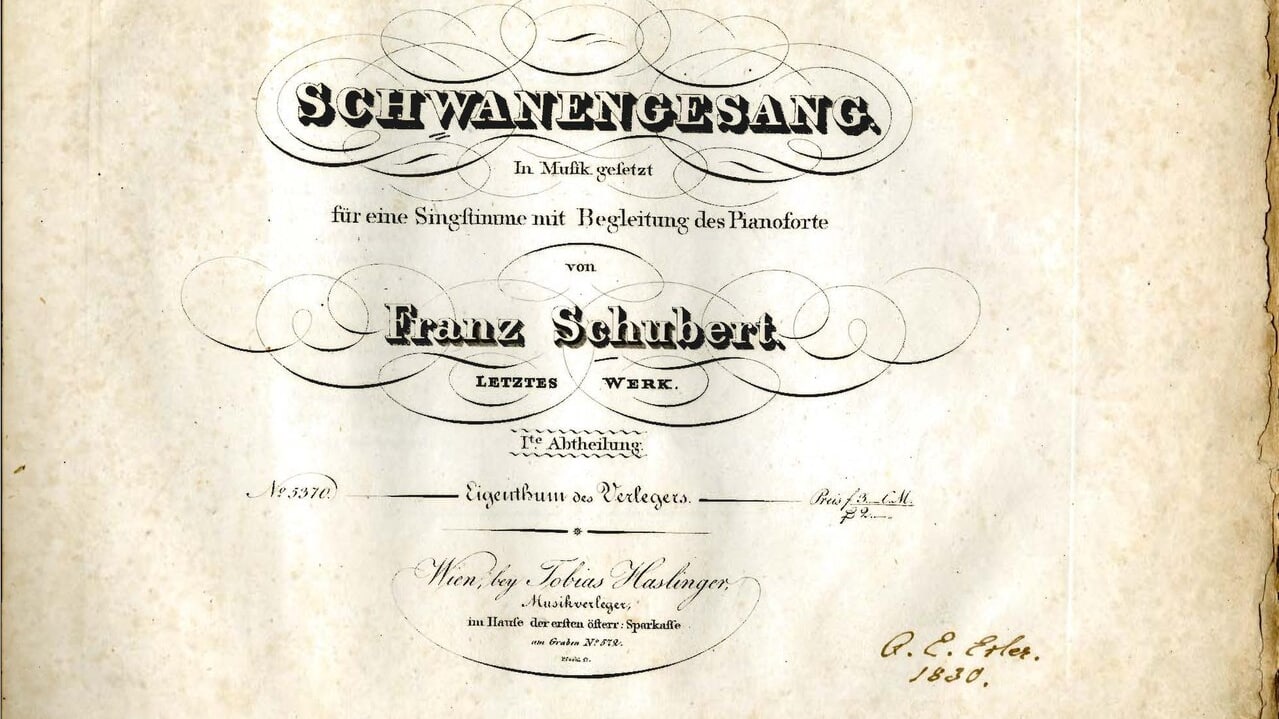
Schubert’s “Schwanengesang,” “Kriegers Ahnung”: Warrior’s Foreboding

Franz Schubert composed Schwanengesang (“Swan Song”), D. 957, a cycle of 14 posthumously published songs, in October of 1828, a month before his death. The haunting second song, Kriegers Ahnung (“Warriors Foreboding”), foreshadows Mahler’s Wo die schönen Trompeten blasen from Des Knaben Wunderhorn. The text by Ludwig Rellstab is the ghostly soliloquy of a soldier who fears imminent death on the battlefield, and who longs to return to his beloved. The piano’s desolate …

Read more

Mahler’s “Des Knaben Wunderhorn,” “Wo die schönen Trompeten blasen”: A Ghostly Nocturnal Vision

Songs gave rise to symphonies during Gustav Mahler’s “Wunderhorn years.” This was the period from 1887 to 1904 when Mahler composed his first four symphonies, all of which are rooted in nature and song. In some cases, songs provided the seeds for symphonic movements. The texts for Mahler’s twelve-song cycle, Des Knaben Wunderhorn (“The Boy’s Magic Horn”) were based on a collection of anonymous German folk poems of the same title, compiled and …

Read more

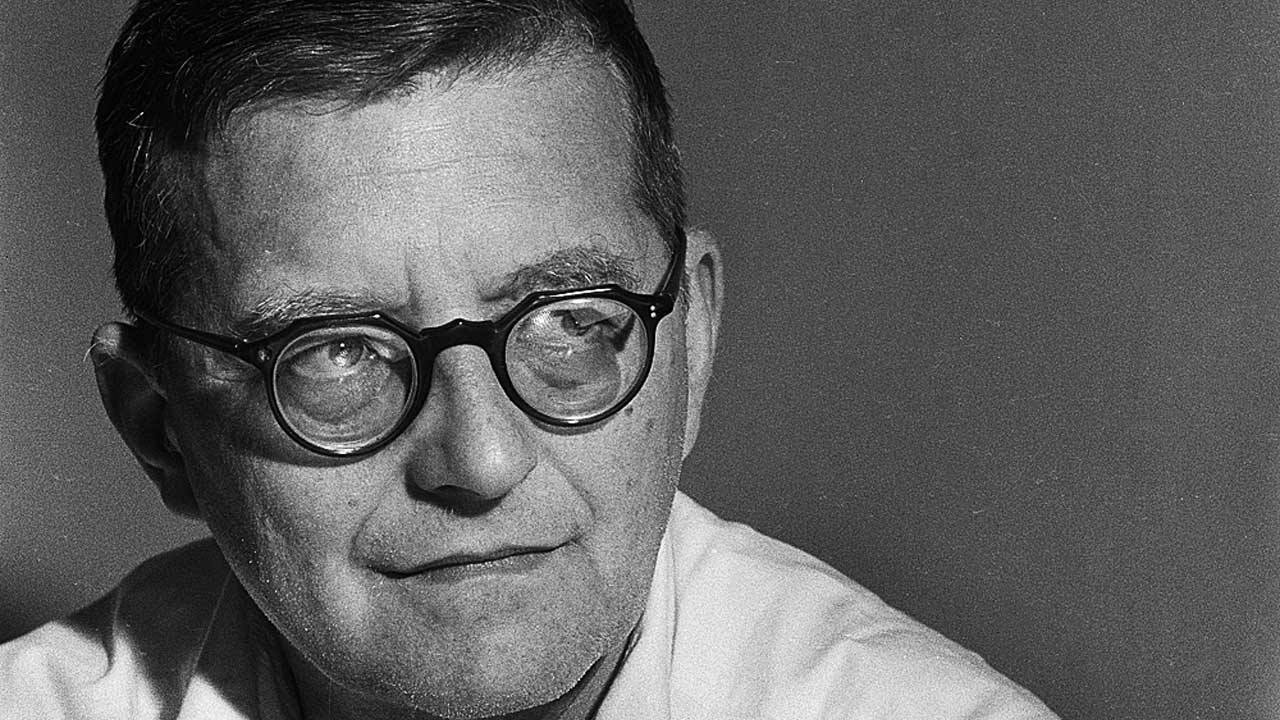
Shostakovich’s Second Violin Concerto: Mournful, Introverted, and Singing

“Very slowly, with difficulty, squeezing it out note by note, I am writing a Violin Concerto,” Dmitri Shostakovich confided to a friend in the spring of 1967, adding, “Otherwise everything is going splendidly.” The Violin Concerto No. 2 in C-Sharp Minor, Op. 129 is a shadowy, introverted work. It is mournful and endlessly singing. “Gone are the instantly memorable images, the brightly etched colors and coruscating ferocity,” writes commentator Gerard McBurney. “Instead we …

Read more

Scriabin’s Etude in C-Sharp Minor, Op. 42, No. 5: Daniil Trifonov

“Scriabin wished to combine all aesthetic experience in a single, mystical musical vision,” writes pianist Daniil Trifonov. Described as a “poet, philosopher, musician, mystic, visionary and egotist,” Russian composer Alexander Scriabin (1872-1915) pushed Romanticism to the breaking point. Experiencing a blending of senses known as synesthesia, he associated musical keys with colors. Scriabin composed the solo piano Etudes, Op. 42 in 1903. The tempestuous Etude No. 5 in C-sharp minor has been …

Read more