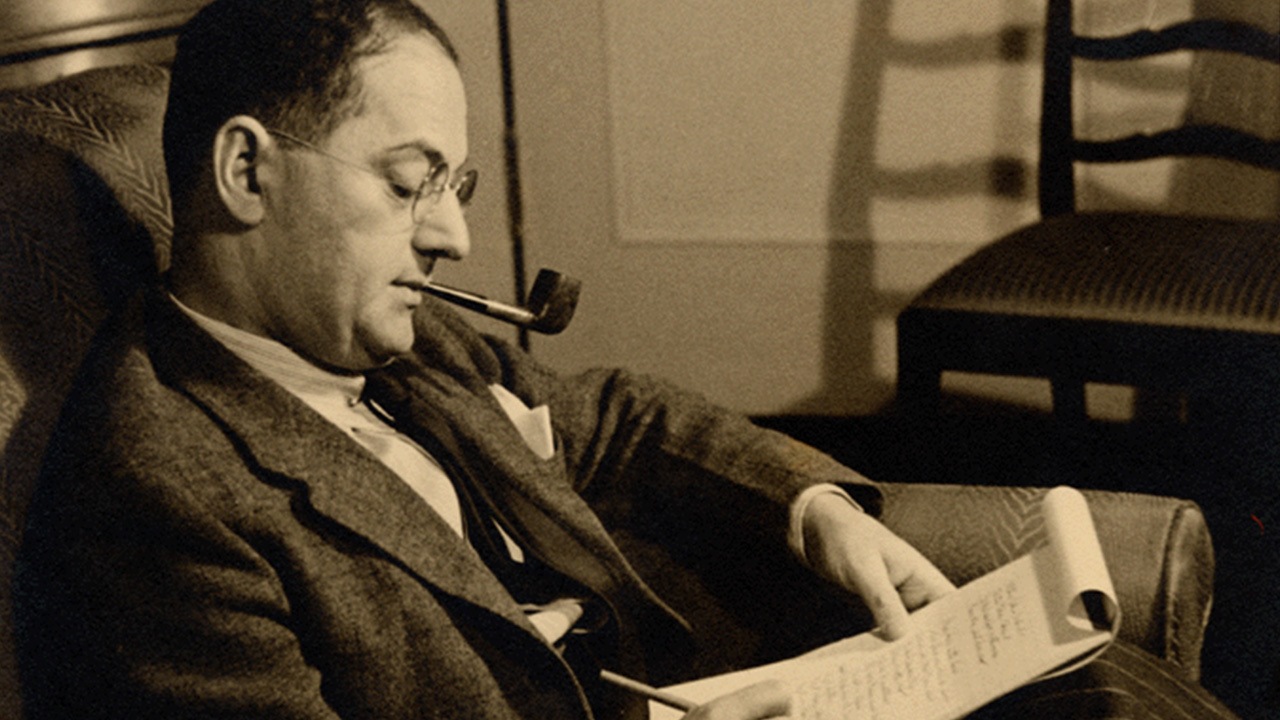
Ned Rorem’s “Early in the Morning”

Arguably, no artist grows up: If he sheds the perceptions of childhood, he ceases being an artist. -Ned Rorem Early in the Morning, an art song by American composer Ned Rorem (b. 1923), is filled with wistful nostalgia. The text, by the poet Robert Hillyer, offers a distant memory of a far-off summer morning. Both the words and the music are shrouded in a dreamlike haze. We’re presented with the ephemeral- sights and smells of the morning- …

Read more

Strauss’ “Muttertändelei” and the Joys of Motherhood

Just look at my beautiful child, With long, golden locks, Blue eyes and rosy cheeks People, do you also have one like it? People, no you have not! Richard Strauss’ ebullient 1899 song, Muttertändelei (“Mother Chatter”), captures the joy of a new mother who would not give her child away “for all the coins in the world.” The comic text is by the German poet, Gottfried August Bürger (1747-1794). The song is filled with sudden, delirious …

Read more

Mahler and the Cuckoo

Even as a child I was struck by birdsong. -Gustav Mahler The call of the cuckoo, often associated with spring, has long inspired composers. For example, the cuckoo’s harmonious falling major third can be heard in Handel’s Organ Concerto No.13 in F Major, the second movement of Beethoven’s “Pastoral” Symphony, and Frederick Delius’ shimmering 1912 tone poem, On Hearing the First Cuckoo in Spring. The cuckoo’s call also finds its way into the music of Gustav …

Read more

Mahler’s Final, Haunting “Wunderhorn” Songs: “Revelge” and “Der Tamboursg’sell”

In Monday’s post, we listened to Gustav Mahler’s Fourth Symphony, a work which grew out of the 1892 song, “Das himmlische Leben” (“The Heavenly Life”). The Symphony was written primarily during the summers of 1899 and 1900 shortly after Mahler was appointed director of the Vienna Court Opera. As a follow up, let’s listen to two songs which compositionally bookend the Fourth Symphony- Revelge (“The Dead Drummer), composed in July of 1899, and Der Tambourg’sell (“The …

Read more

Remembering Dmitri Hvorostovsky

The Russian operatic baritone Dmitri Hvorostovsky passed away this week following a two-and-a-half-year battle with brain cancer. He was 55. Here are some highlights from his distinguished career: In the aria, Ja vas lyublyu, from the second act of Tchaikovsky’s The Queen of Spades, Prince Yeletsky pours out his love for Liza while lamenting her inability to trust him fully. Listen to the way this aria moves from majestically soaring passion to the depths of despair as the …

Read more

Strauss’ “Four Last Songs”: Saying Goodbye to Romanticism

Richard Strauss lived long enough to witness the death of one world and the emergence of another. Consider that when Strauss wrote his first song, Weihnachtslied, in 1870 at the age of 6, Wagner was just hitting his stride with the premiere of Die Walküre, and Tchaikovsky had recently completed his gushingly romantic Overture-Fantasy, Romeo and Juliet. By 1949, the year of Strauss’ death, the atomic bomb had been dropped. The corinthian-column-studded Munich National Theater, where Strauss’ father Franz …

Read more

Autumnal Ives

Earth rests! Her work is done, her fields lie bare, and ‘ere the night of winter comes to hush her song and close her tired eyes, She turns her face for the sun to smile upon and radiantly, radiantly, thro’ Fall’s bright glow, he smiles and brings the Peace of God! These lines may have been written by Harmony Twichell, the wife of Charles Ives. They form the text of Ives’ hypnotic 1908 song, Autumn. Listen …

Read more