Beethoven’s “Kreutzer” Sonata: Five Key Recordings
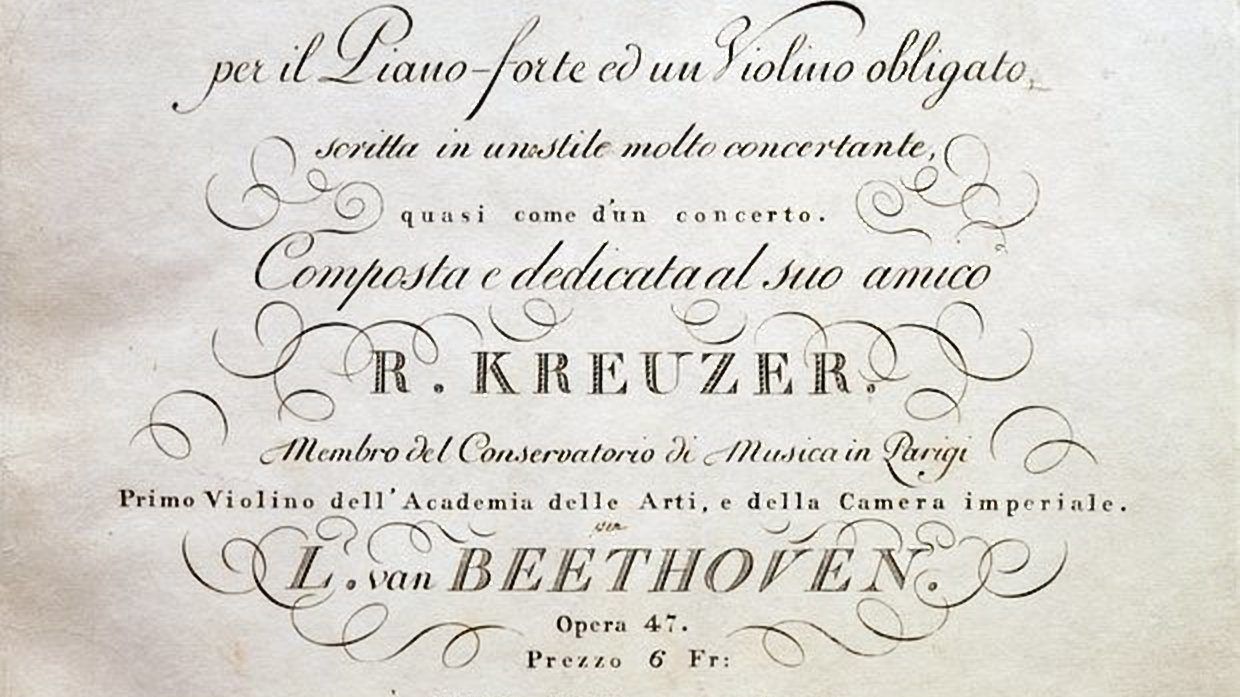
Beethoven’s Violin Sonata No. 9, Op. 47—better known as the “Kreutzer” Sonata—was first performed on May 24, 1803. 216 years ago today, Beethoven and the Afro-European violinist George Bridgetower (1778-1860) premiered this convention-shattering music at Vienna’s Augarten Theatre. Beethoven was so late in completing the manuscript that Bridgetower was forced to sightread the performance, at times looking over the composer’s shoulder at the full score. Originally, the manuscript was inscribed with the lighthearted …

Read more

“Siegfried’s Death and Funeral March”: Klaus Tennstedt and the LPO, Live in 1988

The final act of Götterdämmerung (“Twilight of the Gods”), the last of the four operas that make up Wagner’s Ring Cycle, is about annihilation and renewal. The gods are brought down by their desire for absolute power. As Todd Sullivan writes in his program notes, The whole world of the gods crumbles in Act III of Götterdämmerung. The long-awaited hero, Siegfried (the misbegotten son of Siegmund and Sieglinde, twin offspring of the god Wotan), …

Read more

Copland’s “Quiet City”: The Trumpet’s Mystic Call

HARK, some wild trumpeter, some strange musician, Hovering unseen in air, vibrates capricious tunes to-night. I hear thee trumpeter, listening alert I catch thy notes, Now pouring, whirling like a tempest round me, Now low, subdued, now in the distance lost. – opening lines of “The Mystic Trumpeter,” Walt Whitman Aaron Copland’s Quiet City begins with primal open intervals (fourths and fifths) which seem to emerge from a vast, wide-open landscape. The expansive pandiatonicism of …

Read more

Beth Levin Plays Beethoven’s Last Three Piano Sonatas

Beethoven said that his final three piano sonatas, written between 1820 and 1822, were conceived “in a single breath.”  In April, 2012, pianist Beth Levin gave what has been described as a “revelatory” performance of these three Sonatas (Op. 109, 110, and 111) in the intimate setting of New York’s Faust Harrison Pianos. Luckily, this special concert, performed on an 1887 Steinway, was recorded and released a year later on the Navona label (“A Single Breath: …

Read more

The Queen of the Night: Opera’s Most Deranged Mother?

This weekend as you celebrate Mother’s Day, count your blessings that you aren’t in the predicament faced by Pamina in Mozart’s The Magic Flute. In one of the opera’s most recognizable arias, “Der Hölle Rache kocht in meinem Herzen“ (“Hell’s vengeance boils in my heart”), Pamina’s mother, the Queen of the Night, flies into a fit of vengeful rage. Placing a knife in her daughter’s hand, the Queen of the Night tells Pamina …

Read more

David Diamond’s Second Symphony: A Mid-Century American Masterwork

Listeners who go in search of “the great American symphony” will be rewarded with a handful of often-neglected mid-twentieth century masterworks. They include the Third Symphonies of Aaron Copland and Roy Harris, the First Symphony of Samuel Barber, as well as music by Howard Hanson, Walter Piston, William Schuman, Peter Mennin, Lou Harrison, and others. These composers came to prominence in the 1930s and 40s, championed by conductors like Boston Symphony music director Serge Koussevitzky. Their musical …

Read more

Brahms’ Third Symphony: “Free But Happy”

Three bold chords, rising in an expansive wind choir, set in motion Brahms’ Symphony No. 3 in F Major.  This powerful, attention-demanding proclamation flings open the door to a ferocious “con brio” first theme which seems to growl with intensity. Filled with wide, octave-exceeding leaps, it’s a theme which is always in motion, restlessly searching for a way forward, and veering continuously between major and minor. Rhythmically, it sets up our expectations, and then …

Read more